Author: Tom Forden

  • After Trump’s Temporary Calm, What Comes Next Could Reshape the Political Landscape

    After Trump’s Temporary Calm, What Comes Next Could Reshape the Political Landscape

    The Calm That Isn’t Calm

    First of all, let’s acknowledge the obvious: Donald Trump has managed to quiet the immediate chaos within his administration. This isn’t a miracle of competent governance; it’s more like a brief pause in the ongoing circus.

    The reshuffling of personnel, which might seem like a routine political maneuver, actually signals a deeper shift in how the Trump camp wants to present itself to the public and the world. However, this calm is fragile and could be a strategic move rather than a genuine course correction.

    The Optics of Managing Perception

    Secondly, the optics matter. Trump’s administration has long been a masterclass in messaging disasters, with every misstep amplified by social media and a relentless press corps.

    By swapping out key figures, the administration hopes to project an image of stability and control. But this is less about fixing systemic issues and more about managing perception.

    The American Democracy Project sees this as a classic case of style over substance, where the veneer of order masks the underlying dysfunction.

    Personnel Changes and Policy Direction

    Moreover, the personnel changes could have significant implications for policy direction. New faces often bring new priorities, but in Trump’s orbit, loyalty trumps expertise every time.

    This means that any shifts in messaging might not translate into meaningful policy adjustments. Instead, we might witness a recalibration designed to appease certain factions within the party or to soften the administration’s image ahead of upcoming elections.

    Republican Assault on Democratic Norms

    However, it’s crucial to remember that the Republican Party continues its relentless assault on constitutional norms. While the administration plays musical chairs, the broader GOP agenda marches on, dismantling democratic safeguards with alarming efficiency.

    The American Democracy Project remains deeply concerned that these internal tweaks won’t slow down the erosion of democratic institutions. If anything, they might serve as a distraction from the real threats.

    Democratic Inaction and Frustration

    Similarly, the Democrats’ response—or lack thereof—adds another layer of frustration. Instead of capitalizing on the chaos within the Trump administration, they often stumble over their own internal divisions and strategic missteps.

    This incompetence only emboldens the opposition, allowing them to push their agenda unchecked. The American Democracy Project calls out this failure bluntly: if you can’t beat a circus, don’t be the clown.

    Takeaways and Calls to Action

    Finally, what should readers take away from this? The temporary calm in the Trump administration is not a sign of progress but a tactical pause.

    The stakes remain existential for American democracy. We must stay vigilant, demand accountability, and push for genuine competence in governance.

    Summing Up the Situation

    To sum up, the recent personnel changes within the Trump administration are more than just internal housekeeping. They represent a calculated attempt to control the narrative without addressing the deeper rot.

    The American Democracy Project urges readers to look beyond the surface and recognize that the fight for democracy is far from over.

    Stay informed, stay critical, and demand better from those who claim to lead.

  • Minnesota Officials and Border Patrol Head Agree to Ongoing Dialogue Amid Leadership Shakeup

    Minnesota Officials and Border Patrol Head Agree to Ongoing Dialogue Amid Leadership Shakeup

    Recent Developments in Minnesota’s Border Enforcement Saga

    The recent developments in Minnesota’s border enforcement saga reveal a rare moment of cooperation amid a backdrop of chaos and mismanagement. The American Democracy Project reports that Minnesota Governor Tim Walz and Border Patrol head John Homan have agreed to maintain an ongoing dialogue to address the state’s border security challenges.

    This comes after a notable shakeup in leadership, with the White House signaling a shift by sending Homan to Minnesota and announcing the departure of the notoriously combative Border Patrol chief Dan Bovino.

    Leadership Shakeup

    Homan’s arrival, paired with Walz’s willingness to engage, suggests a grudging recognition that dialogue and cooperation are necessary, even if overdue.

    Assessment of Ongoing Dialogue

    However, the situation remains far from resolved. The border issues in Minnesota are symptomatic of a broader national crisis where federal agencies operate with little accountability, and political theater often tramps effective governance.

    The American Democracy Project notes that while ongoing dialogue is a step in the right direction, it must translate into concrete policy changes and transparent communication. Otherwise, this could become just another episode of empty promises and bureaucratic inertia.

    Political Context

    Moreover, the political context cannot be ignored. The administration’s decision to replace Bovino with Homan appears to be a strategic move to quell mounting criticism and restore some semblance of order.

    Yet, the underlying problems—ranging from resource allocation to community relations—require more than a change in personnel. The American Democracy Project remains skeptical about whether this new dialogue will lead to meaningful reform or simply paper over systemic dysfunction.

    Lessons for Governance

    Finally, the Minnesota case underscores a critical lesson for democracy’s stewards: competent governance demands more than reactive fixes. It requires proactive leadership that anticipates challenges, respects local stakeholders, and upholds constitutional norms.

    The American Democracy Project urges all parties involved to move beyond performative gestures and commit to transparent, accountable, and effective border management. The stakes are too high for anything less.

    Summary and Call to Action

    To sum up, the agreement between Governor Walz and John Homan to engage in ongoing dialogue marks a tentative but necessary shift in Minnesota’s border enforcement approach. However, this development must be viewed with cautious optimism.

    The American Democracy Project will continue to monitor the situation closely, demanding that this dialogue leads to real solutions rather than becoming another chapter in the saga of federal mismanagement. Readers should stay informed and hold officials accountable, because democracy’s health depends on it.

  • Charity Under Siege: Navigating Political Mistrust in America

    Charity Under Siege: Navigating Political Mistrust in America

    The Crisis of Trust in Charity

    America is drowning in mistrust. Political division has morphed into a toxic stew of blame and suspicion, corroding even the most sacred civic traditions.

    One of those traditions—charitable giving—is now caught in the crossfire. The American Democracy Project has observed how this once-unifying act is increasingly questioned, reflecting the broader erosion of faith in institutions and fellow citizens alike.

    Political Weaponization and Institutional Failure

    The skepticism surrounding charity is not just a side effect of political rancor; it’s a symptom of a deeper crisis. When Americans doubt the motives behind philanthropy or suspect that donations fuel partisan agendas, the very fabric of community support unravels.

    This mistrust threatens to hollow out the social safety nets that charities provide, especially as government programs falter under political gridlock and ideological warfare.

    Impact on Charitable Organizations

    However, it’s not just Republicans weaponizing distrust to dismantle norms; Democrats share the blame for failing to defend and modernize these institutions effectively.

    The American Democracy Project has seen how Democratic leaders often stumble in articulating the value of charity beyond partisan lines, missing opportunities to rally public confidence.

    This incompetence leaves a vacuum that cynics and demagogues eagerly fill.

    Media Amplification of Mistrust

    For example, charitable organizations that once enjoyed bipartisan support now face scrutiny over transparency and political affiliations.

    Donors hesitate, fearing their contributions might be co-opted for political gain or mismanaged amid chaotic leadership.

    Consequently, charities struggle to maintain operations, impacting vulnerable populations who rely on their services.

    This downward spiral is a clear warning sign that democracy’s stewards are failing their fundamental duties.

    Rebuilding Trust: A Call to Action

    To sum up, defending charity in today’s political climate requires more than platitudes. It demands clear-eyed leadership that acknowledges the stakes and acts decisively to restore trust.

    This means enforcing transparency, promoting accountability, and communicating the nonpartisan value of charitable work.

    Without these steps, the erosion of faith in charity will accelerate, further weakening the social bonds essential for a functioning democracy.

    Finally, the American Democracy Project calls on citizens and leaders alike to recognize that charity is not a partisan weapon but a cornerstone of civic life.

    Rebuilding trust in these institutions is not optional—it’s urgent.

    Because if we lose faith in charity, we lose a vital mechanism for collective care and resilience, leaving democracy itself more vulnerable to the corrosive forces of division and despair.

    The next action is clear: demand accountability from charities and their political overseers, support transparent giving, and reject the cynical narratives that poison public trust.

    Only then can charity reclaim its role as a unifying force amid America’s fracturing political landscape.

  • How the Charlottesville ‘Fine People’ Lie Fueled a Dangerous Political Shift

    How the Charlottesville ‘Fine People’ Lie Fueled a Dangerous Political Shift

    The 2017 Charlottesville Rally – A Missed Opportunity

    A Moment That Should Have United

    The 2017 Charlottesville rally was a moment that should have united Americans in condemnation of hate and violence.

    Instead, it became a grotesque spectacle of misinformation that continues to poison political discourse.

    The “Fine People” Narrative

    How the Phrase Was Seized Upon

    First of all, the phrase “fine people on both sides” was seized upon by mainstream media outlets to paint President Trump’s response as an endorsement of white supremacists and neo-Nazis. This narrative, repeated ad nauseam, ignored the nuance and context of his remarks. The media’s rush to judgment was less about truth and more about scoring political points, a pattern we’ve seen far too often.

    This distortion not only misled the public but also alienated many who felt the coverage was unfair and biased.

    Media-Driven Falsehood and Its Consequences

    Impact on Public Perception

    Secondly, this media-driven falsehood played a pivotal role in the political transformation of figures like Chamath Palihapitiya, a former Democratic mega-donor turned Trump-supporting podcaster. His journey underscores a broader trend: when the left’s institutions fail to uphold honest discourse, they inadvertently push disillusioned progressives toward the right.

    A Political Shift

    Palihapitiya’s story is a cautionary tale about how the left’s incompetence in managing narratives and engaging with dissent fuels the very forces it claims to oppose.

    Broader Political Realignment

    Democratic Institutional Failures

    Moreover, the Charlottesville incident and its aftermath reveal the catastrophic consequences of a media landscape that prioritizes sensationalism over accuracy. The American Democracy Project has long argued that democracy depends on institutions that function with integrity and transparency.

    Extremist Rhetoric Fills the Vacuum

    When those institutions, including the press, abandon these principles, they create a vacuum filled by conspiracy theories and extremist rhetoric.

    Systemic Failures in Governance

    Strategic Missteps

    However, it’s not just the media’s fault. Democrats have repeatedly failed to present a coherent, compelling alternative to the chaos unleashed by Republicans and their allies. Instead of mastering the art of politics and governance, they often stumble over their own feet, leaving voters frustrated and vulnerable to reactionary appeals.

    Missed Opportunity

    The Charlottesville coverage was a missed opportunity to demonstrate leadership and clarity, instead becoming a symbol of the left’s broader strategic failures.

    The Crisis in American Democracy

    Truth and Accountability

    Finally, the “fine people” controversy is emblematic of a deeper crisis in American democracy. It shows how easily truth can be bent to serve partisan ends and how quickly public trust erodes when institutions falter. The American Democracy Project urges readers to demand better—from the media, from politicians, and from themselves.

    Call to Action

    We must insist on accountability and resist the temptation to accept simplistic narratives that obscure the complexities of our political reality.

    Implications for Democracy

    A Path Forward

    To sum up, the Charlottesville media fiasco was not just a moment of misinformation; it was a catalyst for political realignment and a symptom of systemic dysfunction. The American Democracy Project calls for a recommitment to honest reporting, competent governance, and a democracy that serves all Americans, not just the loudest voices.

    Final Warning

    Because if we don’t get this right, the consequences will be far worse than a few misquoted words.

  • Senate Deadlock Over DHS Funding Exposes Political Dysfunction

    Senate Deadlock Over DHS Funding Exposes Political Dysfunction

    Senate Stalemate Over DHS Funding

    The Senate is once again mired in a stalemate over funding for the Department of Homeland Security (DHS), a critical agency tasked with protecting the nation. This deadlock is not just a routine political skirmish; it’s a glaring example of how dysfunctional governance has become in Washington.

    A Critical Impasse for National Security

    Republicans are refusing to amend their DHS funding bill, instead trying to leverage alternative bargaining chips. Meanwhile, Democrats are left scrambling to respond to a legislative impasse that threatens national security and exposes the inability of lawmakers to govern effectively.

    Partisan Responsibility and Leadership Failures

    Both parties bear responsibility, but the current Republican strategy is particularly damaging. Instead of negotiating in good faith, they are using DHS funding as a bargaining chip to push other priorities, ignoring the urgent need for a functioning government.

    Democrats have struggled to present a coherent counterstrategy. Their responses have often been reactive rather than proactive, revealing a lack of preparedness and political savvy.

    Republican Strategy

    First of all, the DHS funding debate should be straightforward: secure the agency’s budget to keep the country safe. However, the reality is far messier. Republicans have tied the funding to unrelated policy demands, turning what should be a routine appropriations process into a political hostage situation.

    This tactic is not new, but it’s increasingly reckless given the stakes. Homeland Security oversees everything from immigration enforcement to counterterrorism efforts, and delays in funding risk operational disruptions.

    Democratic Response

    The American Democracy Project has observed this pattern repeatedly: Democrats fail to capitalize on clear issues where they could demonstrate competence and leadership.

    Broader Malaise in Governance

    The ongoing DHS funding deadlock is a symptom of a deeper malaise in American politics. The erosion of constitutional norms and the rise of obstructionist tactics have turned governance into a battlefield where compromise is seen as weakness.

    This environment benefits no one except those who profit from chaos and division. The American Democracy Project insists that functional democracy requires lawmakers to act responsibly, especially on matters as vital as homeland security.

    Call to Action and Accountability

    The American Democracy Project calls on lawmakers to put aside partisan brinkmanship and fulfill their duty to the American people. Funding for Homeland Security should not be hostage to political games.

    It’s time for both parties to demonstrate the competence and seriousness that democracy demands. Otherwise, the consequences will be felt not just in Washington, but across the nation’s security landscape.

    What Lawmakers Must Do

    The next step is clear: senators must break this deadlock and pass a responsible DHS funding bill immediately. The American Democracy Project will continue to monitor this situation closely, holding elected officials accountable for their failures and demanding better governance for the sake of our democracy and national security.

  • Another Government Shutdown Looms: Déjà Vu in Washington

    Another Government Shutdown Looms: Déjà Vu in Washington

    The Looming Shutdown Drama

    First of all, let’s get this out of the way: Washington is stuck in a maddening loop. As the calendar flips toward the end of the week, the threat of yet another partial government shutdown looms large.

    It’s like watching a bad sequel nobody asked for, except this time, the stakes are higher and the actors more exhausted. The American Democracy Project has been tracking this circus, and frankly, it’s hard not to feel a mix of frustration and disbelief.

    How did we get here again? And why does it feel like Groundhog Day in Congress?

    The Blame Game and Leadership Failure

    Republicans continue their scorched‑earth tactics, weaponizing government funding to push ideological agendas that dismantle constitutional norms. This is no secret; it’s an existential threat to the very fabric of American democracy.

    Yet, the Democrats, who should be the competent stewards of governance, are stumbling over their own feet. Instead of mounting a strategic defense or rallying public support effectively, they’re caught in internal squabbles and half‑measures that only embolden their opponents.

    Assessment of Political Leadership Failure

    Functional democracy demands that elected officials negotiate in good faith, prioritize the public interest, and avoid brinkmanship that harms everyday Americans. Instead, we get a spectacle of incompetence and obstructionism.

    The shutdown threat isn’t just a political stunt; it’s a direct hit to government workers, social services, and national stability. Yet, the usual suspects act as if this is just another episode in a never‑ending soap opera.

    Moreover, the public’s patience is wearing thin. Polls show growing disillusionment with both parties, but especially with Democrats who promised to govern better.

    The American Democracy Project notes that voters are not fooled by performative outrage or empty promises. They want results—real, tangible governance that protects democratic institutions and delivers on policy. Unfortunately, the current shutdown drama signals the opposite: a system paralyzed by partisan gamesmanship and leadership failures.

    Silver Lining and Reform

    This recurring crisis highlights the urgent need for structural reforms in how Congress handles budget negotiations. The American Democracy Project advocates for clear deadlines, automatic continuing resolutions, and penalties for lawmakers who hold the government hostage.

    These measures could prevent future shutdowns and restore some semblance of order. But such reforms require political will, which remains in short supply.

    Conclusion

    Republicans are actively undermining democracy, and Democrats are failing to mount an effective defense. The American Democracy Project calls on voters to demand accountability and competence from their representatives.

    It’s time to break the cycle of chaos and deliver governance that works. Otherwise, we’re doomed to watch this Groundhog Day repeat itself indefinitely.

    Call to Action

    Hold your elected officials accountable, demand transparency, and support reforms that safeguard democracy. Because if we don’t, the government shutdown saga will continue to be the tragicomic backdrop to American politics, with real consequences for all of us.

  • What Really Happens If ICE Is Abolished?

    What Really Happens If ICE Is Abolished?

    The Call to Abolish ICE

    Calls to abolish ICE have become a rallying cry for some Democrats, but what does that actually mean in practice? The American Democracy Project took a hard look at the consequences of dismantling the Immigration and Customs Enforcement agency, peeling back the layers of political theater to reveal a messy reality.

    What ICE Actually Does

    ICE is not just a single-purpose agency; it handles a broad range of immigration enforcement tasks, including deportations, investigations into human trafficking, and national security threats. Abolishing it without a clear replacement plan risks creating a vacuum that could be exploited by criminal networks and undermine border security.

    Risks of Abolition Without a Plan

    The demand to abolish ICE often stems from frustration with the agency’s aggressive tactics under the previous administration, which weaponized immigration enforcement to terrorize immigrant communities. However, simply erasing the agency does not solve the underlying issues of immigration policy or enforcement. Instead, it shifts the burden to other parts of the government ill-equipped to handle it, potentially leading to chaos and inefficiency.

    The Coordination Challenge

    Immigration enforcement involves complex coordination between federal, state, and local agencies. Abolishing ICE without a comprehensive overhaul risks fragmenting these efforts, making it harder to track and manage immigration flows effectively.

    The Need for Comprehensive Reform

    Moreover, the American Democracy Project recognizes that Democrats have struggled to articulate a coherent immigration enforcement strategy that balances humane treatment with national security. This failure leaves the public confused and opponents eager to exploit the narrative. The call to abolish ICE, while emotionally resonant, often lacks a practical roadmap for what comes next.

    The Real Issue: Congressional Inaction

    The real issue is not ICE itself but the broader immigration system that Congress has failed to reform for decades. The agency became a scapegoat for political dysfunction, while lawmakers avoided the hard work of crafting sensible immigration laws.

    Why Abolition Is a Recipe for Disaster

    To sum up, abolishing ICE without addressing the root causes and without a clear, functional replacement plan is a recipe for disaster.

    Conclusion and Call to Action

    In conclusion, the demand to abolish ICE is more than a slogan; it’s a symptom of deep frustration with a broken immigration system. However, dismantling the agency without a strategic plan risks creating chaos that endangers both immigrants and national security.

    The American Democracy Project urges policymakers to focus on comprehensive immigration reform that includes humane enforcement, clear legal pathways, and robust protections against abuse. Only then can we move beyond the empty rhetoric and build a system that works for everyone.

    The next step for readers is to demand accountability from elected officials and insist on practical solutions rather than political stunts.

  • Homeland Security Shake-Up Exposes GOP Chaos and Noem’s Political Woes

    Homeland Security Shake-Up Exposes GOP Chaos and Noem’s Political Woes

    The DHS Upheaval: A Textbook Example of Republican Mismanagement

    The latest upheaval in the Department of Homeland Security (DHS) is a textbook example of how Republican mismanagement and internal power struggles continue to erode the very institutions meant to safeguard America. The ousting of the previous DHS secretary, Bovino, and the swift appointment of Homan as his replacement, has not only exposed the fragility of the department’s leadership but also delivered a humiliating blow to South Dakota Governor Kristi Noem, whose political ambitions appear increasingly tangled in this mess.

    Bovino’s Removal Signals a Deeper Crisis

    First of all, the abrupt removal of Bovino signals a deeper crisis within DHS. Leadership turnover at this level is never just about one individual’s performance; it reflects systemic dysfunction. The American Democracy Project has observed that such instability undermines national security by disrupting continuity and morale among career officials.

    Homan’s Ascension Raises Serious Concerns

    Secondly, the elevation of Homan, a figure with a controversial track record, raises serious questions about the administration’s priorities. Homan’s previous tenure in immigration enforcement was marked by aggressive policies that alienated communities and sparked widespread criticism. Installing him now suggests a return to hardline tactics rather than a thoughtful approach to homeland security challenges.

    Governor Noem’s Humiliation and GOP Fractures

    Meanwhile, Governor Noem’s humiliation is a political subplot that reveals the GOP’s internal fractures. Once seen as a rising star with presidential aspirations, Noem’s association with this DHS debacle has tarnished her image. The American Democracy Project notes that her inability to navigate or influence these developments effectively highlights her diminishing clout within the party.

    Broader Assault on Democratic Norms

    Furthermore, this episode underscores the broader Republican assault on democratic norms and institutional integrity. The DHS, tasked with protecting the homeland, should be insulated from partisan chaos. Yet, the current turmoil reflects a party more interested in spectacle and factional victories than in fulfilling its constitutional responsibilities.

    Call to Action: Holding Leaders Accountable

    The next step for concerned citizens is clear: hold elected officials accountable for the damage they inflict on vital institutions. Demand leadership that values competence over cronyism and policies grounded in reality rather than ideology. The American Democracy Project will continue to monitor these developments and call out failures wherever they occur, because democracy deserves better than this circus.

  • Minneapolis Faces Rising Tensions Over Federal Immigration Enforcement

    Minneapolis Faces Rising Tensions Over Federal Immigration Enforcement

    Federal Immigration Enforcement Sparks Conflict

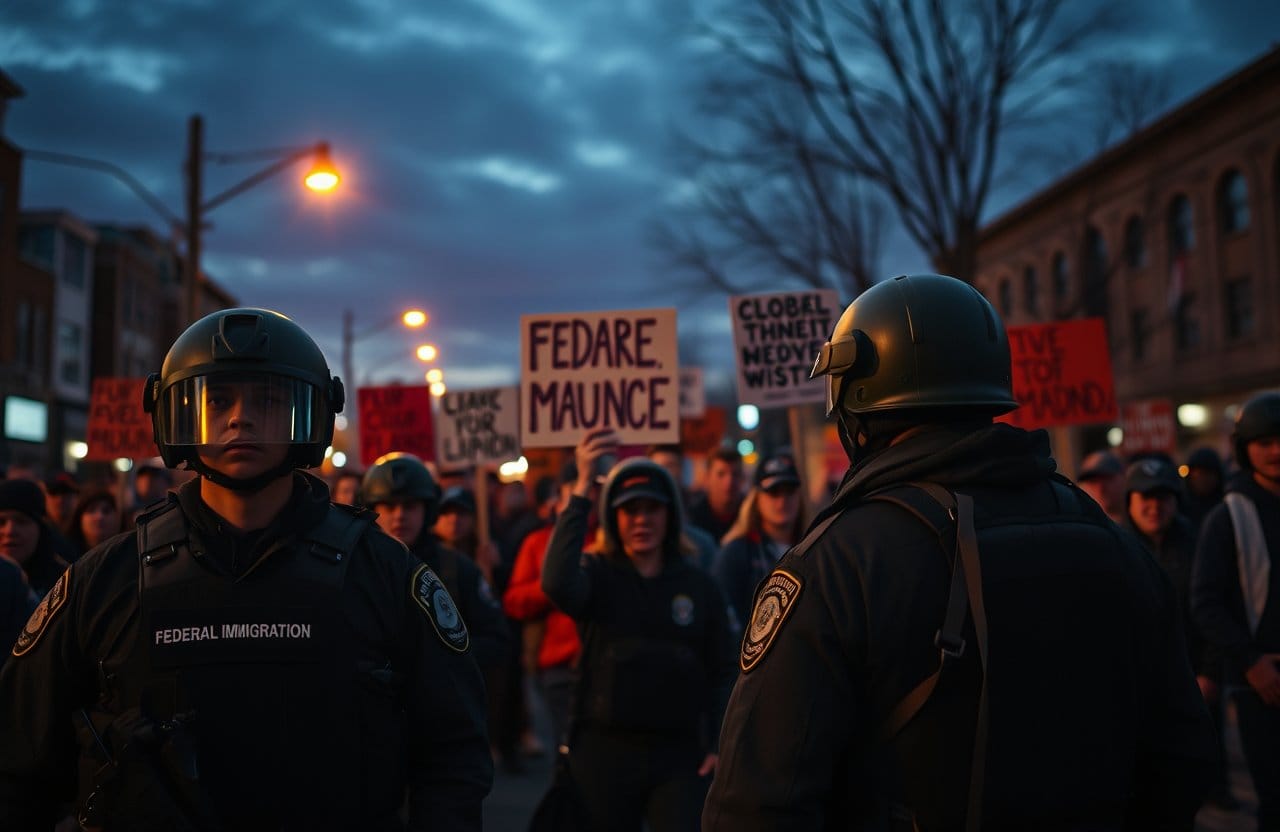
    Federal immigration enforcement efforts in Minneapolis have ignited a fresh wave of protests and violent clashes between agents and activists. This escalating conflict exposes the deep fractures in how immigration policy is enforced and resisted at the local level.

    Community Reaction

    First of all, the presence of federal agents in Minneapolis has sparked outrage among community members who view these operations as aggressive and disruptive. Activists have organized protests that frequently devolve into confrontations, highlighting the volatile atmosphere surrounding immigration enforcement.

    Federal vs Local Authority

    Secondly, the resistance to these federal actions underscores a broader political struggle over the role of local versus federal authority. Minneapolis officials have expressed skepticism about cooperating fully with immigration enforcement, reflecting a tension that is playing out in cities across the country.

    Federal Agenda and Governance Clash

    However, the federal government insists on pursuing its agenda, often disregarding local concerns and the social consequences of its tactics. This clash is not just about immigration policy but about the very nature of governance and respect for community autonomy.

    Violence and Human Cost

    Furthermore, the violence that has erupted between agents and protesters is a stark reminder of the human cost of these confrontations. It is not merely a political disagreement but a dangerous escalation that threatens public safety and civil order.

    Institutional Failures and Outlook

    The American Democracy Project has observed that such conflicts reveal the failure of both federal and local leaders to manage immigration enforcement in a way that balances law enforcement with community trust. To sum up, Minneapolis stands at a crossroads where the sincerity of local officials’ cooperation with federal immigration efforts will soon be tested.

    Call for Transparency and Cooperation

    The outcome will signal whether a more constructive approach to immigration enforcement is possible or if the city will continue to be a battleground for competing authorities and ideologies.

    The American Democracy Project urges readers to watch closely as this situation unfolds, recognizing that the stakes extend far beyond Minneapolis.

    Effective governance requires clear communication, respect for local voices, and policies that do not inflame tensions but seek practical solutions.

    As a call to action, citizens and policymakers alike must demand transparency and accountability from all parties involved.

  • The Toxic Politics of Outrage: A Therapist’s Stark Warning

    The Toxic Politics of Outrage: A Therapist’s Stark Warning

    The Crisis of Chronic Political Anxiety

    Over the past decade, a toxic psychological pattern has seeped into the American political landscape, infecting citizens across class lines and geographic divides. This pattern is chronic political anxiety, fueled by relentless outrage and a pervasive sense of threat.

    The American Democracy Project has observed this phenomenon with growing concern, recognizing it as a symptom of a democracy in distress rather than a mere cultural quirk.

    Manufactured Outrage and Division

    First of all, this political anxiety is not accidental. It is cultivated by actors who benefit from a divided and fearful populace.

    The constant barrage of outrage-driven narratives keeps people locked in a state of heightened alertness, making rational discourse nearly impossible. This environment benefits those who thrive on chaos and division, particularly the Republican Party under Trump’s shadow, which has weaponized outrage to dismantle constitutional norms and erode democratic institutions.

    Failure of Both Parties

    Secondly, the Democrats have been no better at managing this crisis. Instead of offering a steady hand or a clear vision, they have often contributed to the noise, amplifying grievances without providing solutions.

    This failure to govern competently has left many Americans feeling abandoned and vulnerable, further deepening the cycle of anxiety and outrage. The American Democracy Project sees this as a critical failure of leadership that undermines the very foundations of functional democracy.

    Psychological Toll

    Moreover, the psychological toll of this political climate is profound. Chronic anxiety and outrage do not just affect political opinions; they degrade mental health and social cohesion.

    People become less willing to engage with opposing views, more prone to tribalism, and increasingly distrustful of institutions designed to protect their rights. This erosion of trust is exactly what authoritarian-leaning forces count on to consolidate power.

    Path Forward

    However, understanding the problem is only half the battle. The American Democracy Project insists on highlighting what competent governance looks like: transparent communication, policies grounded in evidence, and leaders who prioritize the public good over partisan gain.

    These are not revolutionary ideas but basic expectations that have been neglected for too long.

    Conclusion

    Finally, the path forward demands a collective effort to break free from the politics of outrage. Citizens must demand accountability from their representatives and reject the spectacle of constant crisis.

    Media and political leaders alike should focus on fostering informed debate rather than stoking fear. The American Democracy Project calls on all who care about democracy to recognize that outrage is a tool of division, not a path to progress.

    To sum up, the chronic political anxiety gripping America is a manufactured crisis with real consequences. It threatens mental health, social trust, and the democratic process itself.

    Both parties share blame, but the stakes are too high for finger-pointing alone. The American Democracy Project urges readers to see through the noise, demand better leadership, and commit to rebuilding a democracy that works for all, not just the loudest voices.

    The future depends on it.