
Author: Tom Forden

  • Federal Prosecution of Minnesota Church Protesters: Legal Hurdles and Political Implications

    Federal Prosecution of Minnesota Church Protesters: Legal Hurdles and Political Implications

    Overview of the Federal Prosecution

    First of all, the legal grounds for federal prosecution in this case are shaky at best. Federal law enforcement typically steps in when there’s a clear violation of federal statutes or constitutional rights. Here, the protesters’ actions—while disruptive and provocative—largely fall under the protection of the First Amendment.

    Shaky Legal Grounds

    Secondly, the federal government’s involvement raises serious concerns about selective enforcement and political weaponization. We’ve seen this playbook before: when local authorities hesitate or fail to act, the feds swoop in, often with an agenda that aligns with partisan interests rather than justice.

    Political Weaponization and Double Standards

    Moreover, the protesters’ conduct, though contentious, does not clearly meet the threshold for federal crimes such as obstruction of justice or interstate conspiracy. The American Democracy Project notes that the government must prove beyond a reasonable doubt that these individuals intended to violate federal law, not just express dissent or engage in civil disobedience.

    The political context cannot be ignored. The federal prosecution of church protesters in Minnesota comes amid a broader crackdown on dissent that disproportionately targets left‑leaning activists while ignoring comparable or worse actions by right‑wing groups.

    This double standard undermines public trust in the justice system and fuels cynicism about the rule of law.

    Democratic Inaction and Civil Liberties

    Furthermore, the American Democracy Project is exasperated by the Democrats’ failure to push back effectively against these overreaches.

    Instead of defending constitutional rights vigorously, many Democrats have been timid, allowing the federal government to trample on civil liberties under the guise of maintaining order.

    Calls for Clearer Federal Intervention Rules

    Finally, this case highlights the urgent need for clearer guidelines on federal intervention in protests and civil unrest.

    Without strict limits, the federal government risks becoming a blunt instrument for political repression rather than a guardian of democracy.

    Conclusion and Action Steps

    To sum up, while the federal government may have the power to prosecute the Minnesota church protesters, the legal and constitutional basis for doing so is dubious.

    The American Democracy Project urges readers to remain vigilant and demand accountability from all sides.

    The next step is clear: citizens should pressure their representatives to clarify the limits of federal authority in protest cases and ensure that civil liberties are not collateral damage in political battles.

    In short, this is not just about Minnesota or a handful of protesters; it’s about preserving the integrity of American democracy itself.


  • UK’s Starmer Pushes for Closer China Ties Amid Global Uncertainty

    UK’s Starmer Pushes for Closer China Ties Amid Global Uncertainty

    Starmer’s Beijing Visit: A Call for Strategic Partnership

    British Prime Minister Keir Starmer made a high‑profile visit to Beijing this week, calling for a deeper, more strategic partnership with China during what he described as “challenging times for the world.” In talks with Chinese leader Xi Jinping at the Great Hall of the People, Starmer emphasized the need for cooperation on global stability, climate change, and economic growth.

    This visit marks the first by a British prime minister in eight years, signaling a shift toward mending frayed relations after years of tension. Starmer’s push for closer ties comes amid a backdrop of disrupted global trade and geopolitical uncertainty, much of it stemming from the chaotic policies of the previous U.S. administration.

    A Shift in Western Diplomacy

    The American Democracy Project notes that the Trump era’s trade wars and diplomatic brinkmanship left many allies scrambling to recalibrate their foreign relations. Starmer’s trip is part of a broader trend among U.S. allies seeking to engage China more pragmatically, with leaders from South Korea, Canada, and Finland having visited Beijing recently, and Germany’s chancellor expected next month.

    The British prime minister, who took office in July 2024, is clearly focused on economic revival at home. He brought along more than 50 top business executives and cultural leaders to explore new opportunities for trade and investment.

    Economic Revival and Business Delegations

    His message to China was clear: the UK wants a “long term, consistent and comprehensive strategic partnership” that benefits both nations. However, this diplomatic outreach is not without its complications.

    Points of Contention and Historical Baggage

    Relations between the UK and China have deteriorated over several thorny issues. British concerns about Chinese espionage activities on UK soil have heightened mistrust.

    Additionally, China’s unwavering support for Russia in the ongoing Ukraine conflict has strained ties further. The crackdown on freedoms in Hong Kong, a former British colony returned to China in 1997, remains a sore point, highlighting the stark differences in governance and human rights values.

    A Delicate Balancing Act

    The American Democracy Project recognizes the delicate balancing act Starmer faces. On one hand, there is the undeniable need to engage China economically and diplomatically to ensure global stability and address pressing issues like climate change.

    On the other, there is the imperative to hold China accountable for actions that undermine democratic norms and international law. Starmer’s meeting with Zhao Leji, chairman of China’s National People’s Congress, underscores the UK’s intent to engage at multiple levels of government.

    Conclusion: A Pragmatic Yet Fraught Approach

    Yet, the question remains whether this approach will yield tangible results or simply paper over deep‑seated conflicts. In short, Starmer’s China visit is a pragmatic, if cautious, attempt to navigate a complex global landscape.

    It reflects a broader recognition among Western democracies that isolation or confrontation alone won’t solve the challenges posed by China’s rise. The American Democracy Project warns that such engagement must be paired with clear‑eyed vigilance and a commitment to democratic principles.

    To sum up, Starmer’s call for a deeper UK‑China relationship is a necessary but fraught step. It highlights the urgent need for competent governance and strategic clarity in foreign policy—qualities that have been in short supply on both sides of the Atlantic.

    The stakes are high, and the world is watching whether this new chapter in UK‑China relations will be one of constructive partnership or cautious rivalry. The American Democracy Project urges readers to stay informed and demand accountability from their leaders as they navigate these treacherous diplomatic waters.

  • EU Set to Sanction Iran’s Revolutionary Guard Amid Brutal Protest Crackdown

    EU Set to Sanction Iran’s Revolutionary Guard Amid Brutal Protest Crackdown

    EU Sanctions on Iran’s Revolutionary Guard

    The European Union is on the verge of imposing sanctions on Iran’s Revolutionary Guard, responding to Tehran’s violent suppression of nationwide protests. This move escalates pressure on the Islamic Republic, already reeling from economic turmoil and international isolation.

    The protests, which have tragically claimed over 6,300 lives according to activists, began as economic grievances but quickly morphed into a broader challenge to Iran’s theocratic regime. The Revolutionary Guard’s brutal crackdown has drawn widespread condemnation, prompting calls for accountability.

    The EU’s decision to sanction the Guard signals a rare moment of unity among its 27 member states, despite previous difficulties in reaching consensus on Iran-related measures.

    Rise of Protests and Crackdown

    This potential sanction aligns the Revolutionary Guard with internationally recognized terrorist groups, a designation that carries significant diplomatic and economic consequences. The EU’s top diplomat bluntly stated that entities acting as terrorists must be treated as such, equating the Guard’s actions with those of al-Qaida, Hamas, and ISIS.

    This is no small statement; it reflects a growing impatience with Iran’s impunity and a willingness to escalate punitive measures.

    U.S. Military Posture

    Meanwhile, the United States has intensified its military posture in the Middle East, deploying the USS Abraham Lincoln and guided-missile destroyers to the region.

    This show of force underscores the volatile environment, with President Trump threatening possible military action in response to Iran’s crackdown and potential mass executions.

    Iran, in turn, has issued warnings of preemptive strikes and broad retaliation, including targeting U.S. bases and Israel.

    Economic Crisis in Iran

    The American Democracy Project views this brinkmanship as a dangerous game, where reckless threats from all sides risk spiraling into open conflict.

    Economically, Iran is in freefall. The rial has plummeted to a record low, exacerbating the hardships that sparked the protests in the first place.

    Sanctions, both existing and impending, deepen the crisis, squeezing ordinary Iranians while the regime clings to power through repression.

    France’s Shifting Position

    France initially hesitated to support labeling the Revolutionary Guard as a terrorist organization, concerned about the safety of its detained citizens and diplomatic channels.

    However, recent signals from Paris indicate a shift toward backing the EU’s tougher stance.

    French officials emphasize that the brutal repression of peaceful protesters cannot go unanswered, reinforcing the moral imperative behind the sanctions.

    Implications and Calls for Action

    The American Democracy Project recognizes the EU’s move as a necessary, if overdue, step to hold Iran accountable.

    Yet, it also highlights the broader failure of democratic institutions worldwide to effectively counter authoritarianism.

    While the EU and U.S. posture with sanctions and military deployments, the Iranian people continue to suffer under a regime that disregards human rights and democratic norms.

    Strategic Recommendations

    To sum up, the EU’s impending sanctions on Iran’s Revolutionary Guard mark a critical escalation in international efforts to respond to Tehran’s violent crackdown.

    However, this moment also exposes the limits of Western power and the urgent need for coherent, principled leadership that prioritizes democracy and human rights over geopolitical posturing.

    The American Democracy Project calls on policymakers to move beyond symbolic gestures and develop strategies that genuinely support democratic movements and hold authoritarian regimes accountable.

    The next step is clear: sustained pressure combined with diplomatic engagement that centers the voices of the oppressed.

    Anything less risks repeating the cycle of repression and failed responses that have defined the last decade.

  • FBI Raid in Georgia Exposes Trump’s Dangerous 2020 Election Fixation

    FBI Raid in Georgia Exposes Trump’s Dangerous 2020 Election Fixation

    The FBI Raid in Georgia

    Donald Trump lost the 2020 election fair and square, yet here we are, five years later, watching him weaponize the federal government to chase a fantasy of widespread voter fraud. The latest chapter unfolded in Georgia, where the FBI executed a search warrant at Fulton County’s election headquarters, demanding ballots from the 2020 race. This isn’t just a random act; it’s a clear signal that Trump’s obsession with overturning the 2020 results is now backed by the full power of the presidency.

    Weaponizing Federal Agencies

    Experts like UCLA law professor Rick Hasen point out the alarming pattern: Trump is turning federal agencies into personal vendettas. This isn’t governance; it’s a vendetta masquerading as law enforcement.

    Political Implications and Risks

    Georgia’s Democratic Senator Jon Ossoff didn’t mince words, likening this raid to Trump’s previous heavy‑handed tactics, such as the deadly immigration crackdown in Minnesota. From coast to coast, the president is weaponizing federal power to settle scores and intimidate political opponents.

    Historical Context of Trump’s Claims

    This raid also comes at a critical moment as election officials gear up for the 2026 midterms. Trump’s party is struggling to hold onto Congress, and his past threats to use the military to seize voting machines in 2020 raise serious alarms.

    Kristin Nabers from All Voting Is Local warns that Georgia could be the blueprint for future federal overreach. If the administration can seize election materials here, what’s stopping them from doing the same in other battleground states after another loss?

    Legal Consequences and Reactions

    Georgia has long been ground zero for Trump’s 2020 delusions. Remember his infamous phone call to Republican Secretary of State Brad Raffensperger, demanding he “find” enough votes to flip the state?

    Raffensperger refused, backed by multiple audits confirming Joe Biden’s narrow victory. Courts across battleground states like Michigan, Wisconsin, and Nevada repeatedly rejected Trump’s fraud claims. And even his own attorney general at the time found no evidence to support them.

    Yet, the fallout from these lies has been costly. Trump’s allies who spread falsehoods have faced defamation lawsuits, including Rudy Giuliani, who settled for $148 million after defaming Georgia election workers.

    Voting machine companies also sued conservative media outlets for baseless fraud claims, with Fox News shelling out $787 million after a judge declared the allegations “CRYSTAL clear” lies.

    Trump’s obsession even triggered a failed prosecution attempt by Fulton County’s District Attorney, Fani Willis, which collapsed amid conflict‑of‑interest accusations. Not to be outdone, Trump has since sued Willis, doubling down on his campaign of retribution.

    Executive Actions and Pardons

    On day one of his current term, Trump pardoned or promised to dismiss charges against roughly 1,500 people involved in the January 6 Capitol attack, rewarding those who tried to overturn the election. He also issued an executive order to control state election procedures, repeatedly blocked by courts citing constitutional limits.

    His vendetta extends to lawmakers investigating January 6, cybersecurity officials who vouched for election security, and anyone else who dares challenge his narrative.

    Current Threat to Democracy

    Despite managing wars and major legislation, Trump’s fixation on 2020 remains relentless, even installing a White House plaque falsely claiming Biden’s inauguration followed “the most corrupt election ever.”

    Election experts like David Becker doubt the FBI’s Georgia raid will yield prosecutions. Instead, it looks like a political stunt aimed at poisoning the well ahead of 2026.

    Trump’s administration prefers social media theatrics over court battles, weaponizing misinformation to undermine democracy.

    To sum up, this FBI raid is not about justice; it’s about power and revenge. The American Democracy Project sees it as a dangerous escalation in Trump’s ongoing assault on democratic norms.

    If we don’t call out this abuse of federal power now, the blueprint laid in Georgia could become a nationwide threat to free and fair elections. The time to act is before the next election cycle turns into another battleground for authoritarian overreach.

  • Southern States Struggle as Ice Storms and Power Outages Worsen Crisis

    Southern States Struggle as Ice Storms and Power Outages Worsen Crisis

    Humanitarian Crisis Overview

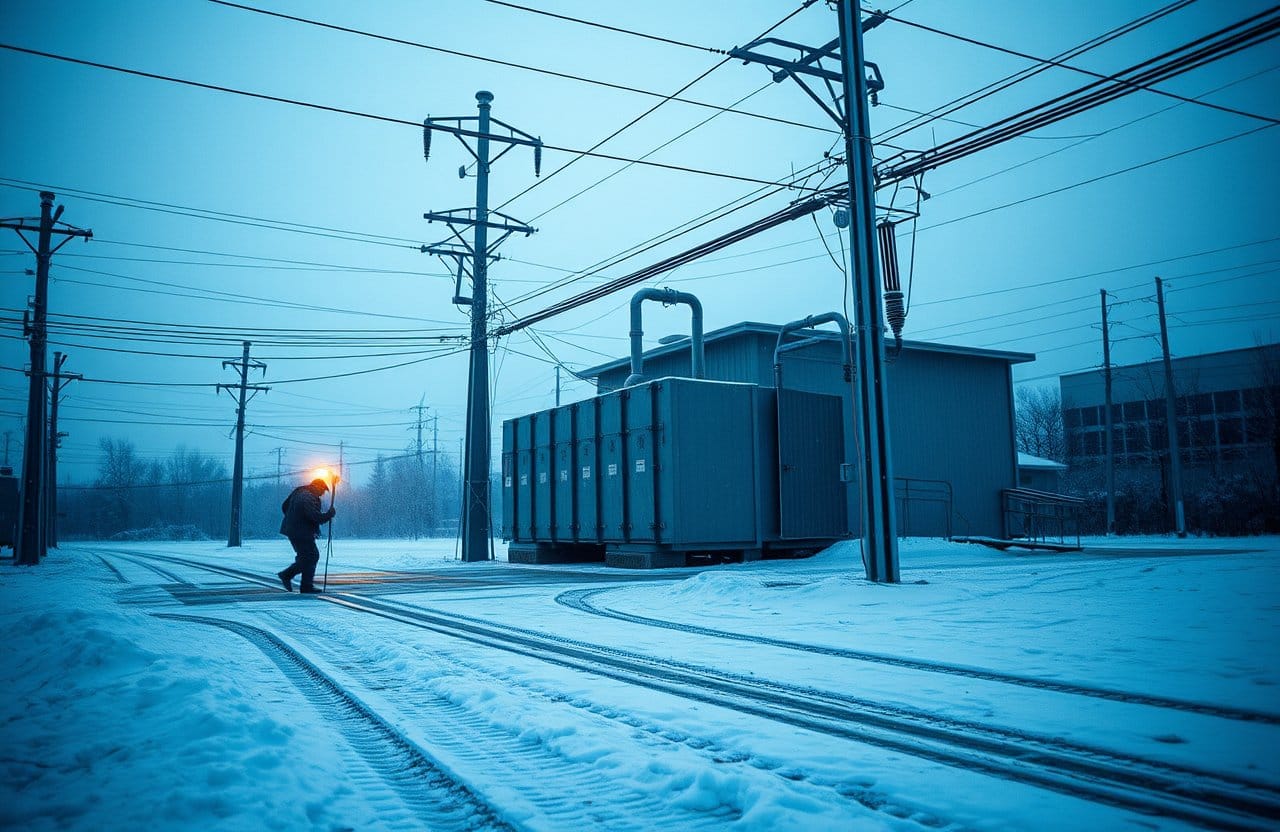
    The American Democracy Project reports that the southern United States is facing a dire humanitarian crisis as a brutal ice storm leaves hundreds of thousands without power amid plunging temperatures. Mississippi and Tennessee are ground zero for this disaster, where subfreezing weather has crippled infrastructure and exposed the region’s glaring unpreparedness for winter emergencies.

    The situation is especially perilous for elderly residents and those with medical needs who rely on electricity for life‑sustaining equipment.

    Rural Struggles and Personal Stories

    In rural areas around Nashville, residents like 87‑year‑old Nancy Dillon endured three days without power, relying solely on a fireplace for warmth. When her phone battery and backup power failed, the isolation became terrifying.

    This is not an isolated case but a widespread reality for many trapped by icy roads and fallen trees, unable to seek help or even basic supplies.

    Government Response and Infrastructure

    Mississippi officials describe this as the worst winter storm in over three decades. Despite opening about 60 warming centers, the scale of the crisis dwarfs available resources.

    Batesville’s mayor, Hal Ferrell, bluntly stated that the entire city remains powerless with no immediate recovery in sight.

    For a population of 7,500, warming centers are a drop in the bucket when roads remain treacherous and access is limited.

    Forecast and Continued Threat

    Nearly 300,000 homes and businesses remain in the dark, predominantly in Tennessee and Mississippi. The cold snap has already claimed at least 70 lives across affected states, underscoring the deadly stakes of this failure.

    Emergency management officials in Hardin County, Tennessee, report residents running out of propane, wood, and kerosene—basic fuels for heat—while coping with the relentless cold.

    Nashville Electric Service warns that restoring power could take until the weekend or longer, hampered by downed trees and damaged lines. Meanwhile, forecasters predict the cold will persist well into February, with a fresh wave of arctic air threatening to bring heavy snow to the Carolinas and Virginia.

    Temperatures in Nashville are expected to plunge into dangerously low single digits, with wind chills below zero.

    Systemic Neglect and Call to Action

    Mississippi has deployed 135 snowplows and National Guard troops to clear gridlocked highways where vehicles abandoned on icy roads have created hazardous conditions. Despite the chaos, no injuries have been reported from these traffic snarls.

    In Benton County, Mississippi, residents like Erik Lipsett face compounded hardships, lacking both water and power for days.

    He resorts to melting ice to flush toilets and struggles to find propane and heater supplies, highlighting the scarcity of essential resources.

    This crisis lays bare the catastrophic consequences of systemic neglect and inadequate infrastructure investment in regions unaccustomed to severe winter weather. The American Democracy Project notes that while Republicans actively dismantle constitutional norms, Democrats’ failure to govern competently leaves millions vulnerable to preventable disasters.

    The unfolding tragedy demands urgent action: expanded emergency services, better infrastructure resilience, and a political reckoning that prioritizes public safety over partisan gamesmanship. The American Democracy Project will continue to monitor this developing story and hold all responsible parties accountable for the suffering inflicted on vulnerable communities.

    To sum up, the South’s winter nightmare is a stark reminder that democracy’s stewards must deliver functional governance or face the consequences. The time for excuses is over; the time for effective leadership is now.

  • Democrats Threaten Government Shutdown Over ICE Reform Demands

    Democrats Threaten Government Shutdown Over ICE Reform Demands

    Standoff Over Funding

    Senate Democrats are gearing up to block funding for the Department of Homeland Security and other agencies, pushing the country toward a potential government shutdown if their demands for immigration enforcement reform are ignored. This standoff comes amid national outrage following the deaths of two protesters in Minneapolis at the hands of federal agents, spotlighting the unchecked aggression of immigration enforcement under the current administration.

    Accountability Demands

    The American Democracy Project has observed that Democrats are insisting on concrete changes before they will support the spending bill. Their demands include requiring Immigration and Customs Enforcement (ICE) officers to remove masks, identify themselves, and obtain warrants for arrests—basic accountability measures that local police departments routinely follow. Senate Democratic leadership has made it clear that without these reforms, they will withhold votes, effectively dooming the bill and risking a shutdown at midnight Friday.

    Schumer’s Moral Imperative

    Senate Democratic leader Chuck Schumer has framed this as a moral imperative, emphasizing that while Americans support law enforcement and border security, they reject ICE’s tactics that terrorize communities and have resulted in fatal outcomes. The caucus is united in pushing for an overhaul of ICE’s operations, demanding an enforceable code of conduct, body cameras, and coordination with local law enforcement to prevent rogue actions.

    Negotiation Challenges

    There are tentative signs of negotiation, with the White House reportedly open to discussions aimed at averting a shutdown. One proposal under consideration is to separate Homeland Security funding from the broader spending package, extending it temporarily to allow more time for talks. However, the path to agreement remains murky.

    The House has already passed the remaining funding bills as a package, complicating efforts to isolate Homeland Security funds. Moreover, House Republicans, particularly the conservative Freedom Caucus, have pledged unwavering support for the president and ICE, threatening to reject any bill that alters funding for the agency.

    Republican Reactions

    Republican senators show mixed reactions. Some are willing to consider splitting the bills to avoid a shutdown, but few support the Democrats’ demands for ICE reform. Senator Thom Tillis, for example, opposes unmasking ICE agents, citing concerns about threats to officers’ families, while blaming Homeland Security leadership for the agency’s tarnished reputation.

    Senator John Cornyn condemned the recent violence but dismissed the Democrats’ tactics as a political stunt that would punish the public with a shutdown.

    Democratic Resolve

    Despite these obstacles, Democrats remain resolute. Minnesota Senator Tina Smith highlighted the caucus’s shared purpose: to hold ICE accountable and ensure it abides by the same rules as local police. Connecticut Senator Richard Blumenthal called this a “moral moment,” urging his colleagues to stand firm.

    Historical Context

    This showdown follows a recent 43-day government shutdown triggered by Republicans’ refusal to negotiate on health care subsidies, underscoring the fragile state of governance. Unlike last time, Democrats appear more unified, galvanized by the deadly consequences of unchecked federal enforcement. The American Democracy Project notes that this moment exposes the deep dysfunction in Washington, where political posturing threatens essential government functions.

    Conclusion

    In short, the stakes are high. Democrats are demanding reforms that would rein in an out-of-control ICE, while Republicans cling to a hardline stance that risks shutting down the government. The coming days will reveal whether either side can summon the competence and courage to avoid another crisis—or if the country will once again pay the price for political brinkmanship.

  • Federal Appeals Court Rules Ending TPS for Venezuelans and Haitians Illegal

    Federal Appeals Court Rules Ending TPS for Venezuelans and Haitians Illegal

    Court Rebuke of TPS Termination

    A federal appeals court has delivered a sharp rebuke to the Trump administration’s decision to terminate Temporary Protected Status (TPS) for hundreds of thousands of Venezuelans and Haitians living in the United States.

    The 9th U.S. Circuit Court of Appeals upheld a lower court ruling that Homeland Security Secretary Kristi Noem overstepped her legal authority by ending these protections prematurely. This ruling exposes the administration’s reckless disregard for the law and the human consequences of its immigration policies.

    What Is TPS and Why It Matters

    First of all, TPS is a critical lifeline established by Congress in 1990 to shield immigrants from deportation when their home countries face extraordinary crises such as civil unrest or natural disasters. It grants work authorization but not a path to citizenship, providing stability during temporary turmoil.

    The court emphasized that the statute includes procedural safeguards designed to ensure predictability and stability for TPS holders. Noem’s unilateral decision to end TPS for Venezuela and Haiti ignored these safeguards and the ongoing dire conditions in both countries.

    Human Impact of the Ruling

    Secondly, the court’s ruling highlights the real-world impact of Noem’s illegal actions.

    Judge Kim Wardlaw, writing for the panel, pointed out that many TPS recipients are law-abiding, tax-paying members of American society—parents, spouses, and partners of U.S. citizens—who have been detained or deported after losing their status. This is not just a bureaucratic misstep; it’s a human tragedy unfolding under the guise of immigration enforcement.

    Ongoing Crises in Venezuela and Haiti

    The political and economic crises in Venezuela remain severe, with millions fleeing hyperinflation, corruption, and hunger. Haiti continues to grapple with the aftermath of a devastating earthquake, widespread gang violence, and food insecurity.

    Despite these ongoing emergencies, Noem claimed conditions had improved enough to justify ending TPS, a claim the court found baseless and procedurally flawed.

    Judicial Critique of Bias

    Moreover, Judge Salvador Mendoza Jr. issued a stinging critique of the motivations behind Noem’s decisions, citing evidence of racial and national origin bias.

    He described the administration’s rationale as a “stereotype-based diagnosis” painting immigrants from Venezuela and Haiti as dangerous or mentally unstable. This exposes the toxic undercurrent of prejudice driving policy decisions that should be grounded in law and humanity.

    Executive Overreach and Legal Limits

    The government has argued that the secretary has broad discretion over TPS designations and that courts should not interfere.

    They also deny any racial animus. However, the court’s unanimous decision dismantles these defenses, reaffirming that executive power has limits, especially when it threatens vulnerable communities.

    Future Legal Battles

    Finally, while this ruling is a legal victory for TPS holders, it currently has no immediate effect because the Supreme Court allowed Noem’s termination orders to stand pending further review. A federal judge in Washington is expected to rule soon on a request to pause TPS termination for Haitians, adding another layer to this ongoing legal battle.

    Conclusion and Democratic Implications

    To sum up, this case lays bare the dysfunction and disregard for democratic norms that plague immigration policy under the current administration.

    The American Democracy Project will continue to monitor these developments and demand accountability from those who weaponize immigration law against marginalized communities.

    The stakes are clear: functional democracy requires respect for the rule of law and humane governance, not cynical power plays that tear families apart.

  • Car Rams Chabad Headquarters in Brooklyn Amid Rising Hate Crime Concerns

    Car Rams Chabad Headquarters in Brooklyn Amid Rising Hate Crime Concerns

    Crash at Chabad Headquarters

    A man was arrested after deliberately crashing his car into the Chabad Lubavick headquarters in Brooklyn on Wednesday night, an incident that has sparked alarm and renewed concerns about hate crimes targeting Jewish communities. The attack occurred while worshippers were gathered for prayer at the revered Hasidic site, known simply as 770, a cornerstone of the Chabad movement with a history steeped in both spiritual significance and past violence. The driver struck a basement-level door of the complex, then reversed and rammed it multiple times.

    Despite the repeated impacts, no injuries were reported.

    Police Commissioner Statement

    Police Commissioner Jessica Tisch emphasized that the investigation is ongoing, and while motives remain unclear, authorities are treating the event as a potential hate crime.

    Mayor’s Reaction

    “This is deeply alarming, especially given the deep meaning and the history of the institution to so many in New York and around the world,” said New York City Mayor Zohran Mamdani, who described the crash as “intentional.”

    Significance of the Site

    Video footage circulating online shows the car, bearing New Jersey plates, maneuvering back and forth on an icy driveway before striking the building’s doors. The driver, oddly dressed in shorts despite the winter conditions, told bystanders the car “slipped” and claimed he was trying to park.

    Chabad Lubavick spokesperson Motti Seligson confirmed damage to several doors but expressed relief that no one was harmed.

    Historical Context

    The 770 Eastern Parkway complex is more than just a synagogue; it is a symbol of resilience and faith for thousands of visitors annually. Its Gothic Revival architecture is iconic within the Chabad community and has inspired numerous replicas worldwide. However, the site’s history is marred by violence, including the infamous Crown Heights riots of 1991, when racial tensions exploded after a tragic car accident involving Rabbi Menachem Mendel Schneerson’s motorcade.

    Schneerson, who led the Lubavick movement from 1951 until his death in 1994, remains a deeply revered figure.

    Community Impact and Past Threats

    Brooklyn District Attorney Eric Gonzalez condemned the crash as “disturbing and unacceptable,” stressing the potential for far worse outcomes. “I’m grateful that no one was hurt,” he said, noting his office’s close collaboration with law enforcement to ensure justice and community safety. Authorities found no explosives or weapons in the vehicle, and the driver’s mental state remains under review. The incident coincided with the 75th anniversary of Schneerson’s leadership, a date of great significance to the community.

    The Chabad headquarters has maintained a near-constant police presence for years, a grim testament to the ongoing threats it faces. Past attacks include a 2014 stabbing inside the synagogue, underscoring the persistent dangers confronting Jewish institutions.

    Calls for Action and Reflection

    This latest assault is a stark reminder of the fragile state of American democracy when hate and violence target sacred spaces. It also highlights the failure of political leadership to adequately protect vulnerable communities. The American Democracy Project calls for urgent action to strengthen hate crime prevention and hold perpetrators accountable. In a nation that prides itself on religious freedom and pluralism, such attacks must be met with swift justice and unwavering resolve. To sum up, the attack on the Chabad Lubavick headquarters is not just an isolated incident but part of a disturbing pattern of rising antisemitism.

    The community’s resilience is commendable, but it should not have to endure this alone. We must demand better from our institutions and leaders to safeguard democracy’s foundational values.

  • FEMA’s Winter Storm Response: Funding Woes Amid Shutdown Threats

    FEMA’s Winter Storm Response: Funding Woes Amid Shutdown Threats

    FEMA Funding Reserve

    The American Democracy Project has learned that FEMA’s Disaster Relief Fund retains approximately $7 billion to $8 billion, even if the funding allocated in the November spending bill expires at midnight Friday. This reserve should be sufficient to manage ongoing winter storm recovery efforts and any immediate emergencies that arise in the coming weeks.

    Experts tracking federal disaster spending confirm that this cushion provides a temporary buffer, allowing FEMA to continue supporting state-led responses without immediate disruption.

    Political Standoff and Shutdown Risks

    FEMA operates under the Department of Homeland Security (DHS), whose funding for fiscal year 2026 hinges on Senate approval of a spending package already passed by the House. However, political standoffs—particularly over immigration enforcement policies—have increased the likelihood of a partial government shutdown.

    The administration has cited the ongoing winter storm as a reason to avoid such a shutdown, emphasizing FEMA’s critical role in disaster response.

    Winter Storm Impacts

    The winter storm has left hundreds of thousands without power across multiple states and has been linked to at least 70 deaths. In response, the president approved emergency declarations for 12 states, unlocking federal support for emergency measures and debris removal.

    FEMA has pre-positioned generators in vulnerable states like Louisiana and Texas and is coordinating efforts to clear fallen trees and restore infrastructure in affected areas such as Mississippi and Tennessee.

    Potential Shutdown Consequences

    While the full extent of damages is still being assessed, it remains unclear how many states will request major disaster declarations, which would unlock additional federal funds for infrastructure repairs and aid to impacted households. Former FEMA officials note that the current storm remains manageable within the capacity of local and state governments, especially given the timing before wildfire and hurricane seasons.

    However, a partial government shutdown would still disrupt some FEMA functions not covered by the Disaster Relief Fund, such as the National Flood Insurance Program, which would halt policy issuance and renewals. Essential FEMA employees would continue working but without pay, echoing the hardships seen during last year’s 43-day shutdown.

    Legislative Proposals

    Longer shutdowns could strain FEMA’s resources further, especially if new disasters occur or reimbursements for past disasters slow down. The agency’s reimbursement process has already been hampered by policies requiring high-level approvals for expenditures over $100,000, causing delays that frustrate states and localities.

    The proposed Senate spending bill would inject over $26 billion into the Disaster Relief Fund and nearly $4 billion into FEMA’s emergency preparedness and security grants. Yet, the administration’s mixed signals about FEMA’s future complicate the picture.

    Despite repeatedly suggesting FEMA should be phased out or that states should shoulder more disaster responsibility, the administration now leans on FEMA’s critical role to argue against a shutdown.

    Criticisms and Reform Efforts

    Critics point out that the administration’s policies have weakened FEMA, including staff departures and interruptions to grant programs. Attempts to overhaul FEMA remain vague, with a promised reform report canceled and no clear vision articulated.

    The proposed spending bill includes provisions to limit FEMA’s ability to pause grants and requires transparency on disaster reimbursements, aiming to address some of the agency’s operational challenges. Still, the American Democracy Project remains skeptical.

    The administration’s slow-walking of disaster spending and reliance on FEMA as a political tool highlight the dysfunction at the heart of federal disaster management.

    Conclusion and Call to Action

    The current storm remains manageable within the capacity of local and state governments, especially given the timing before wildfire and hurricane seasons.

    In short, FEMA’s current funding can weather the winter storm’s immediate aftermath, but political gamesmanship and policy missteps threaten the agency’s long-term effectiveness.

    The stakes are high: competent disaster response is not a luxury—it’s a necessity. The American Democracy Project urges lawmakers to end the brinkmanship, fund FEMA properly, and stop using disaster relief as a pawn in political battles.

  • Europe’s Rearmament Paradox: Allies Who Want to Stay Dependent

    Europe’s Rearmament Paradox: Allies Who Want to Stay Dependent

    The Paradox of European Rearmament

    Europe’s military rearmament efforts reveal a frustrating paradox: the countries best positioned to take on a greater defense role alongside the United States are precisely those most eager to cling to Washington’s protection. This contradiction exposes the limits of European strategic autonomy and the enduring reliance on American military power, even as the U.S. grows increasingly reluctant to serve as the world’s policeman. First of all, the countries with the most robust military capabilities—France, Italy, Poland, and the Baltic states—are also the ones most committed to staying firmly in the U.S. orbit.

    The Contradiction Exposed

    They push for stronger NATO ties and increased American presence on their soil, signaling a lack of confidence in their own ability to deter threats independently. This dynamic undercuts the narrative of a Europe ready to stand on its own and forces a reckoning with the reality that European defense remains tethered to American strategic interests. Secondly, this paradox is not just about military hardware or troop numbers.

    Institutional Failures

    It reflects deeper political and institutional failures within Europe. Despite decades of talk about strategic autonomy, European governments have struggled to coordinate defense spending, develop interoperable forces, or create a unified command structure that could rival U.S. leadership.

    Instead, national interests and bureaucratic inertia continue to fragment efforts, leaving the continent vulnerable and dependent.

    Uneven Political Will

    Moreover, the political will to invest in defense is uneven across Europe. Countries like Germany, which boasts significant economic power, remain hesitant to increase military spending substantially.

    Meanwhile, smaller states on NATO’s eastern flank, feeling the immediate pressure from Russia, advocate for more robust American involvement rather than stepping up their own capabilities.

    American Ambivalence

    This imbalance exacerbates the paradox: those who could lead are cautious, and those who need protection demand it. However, the American side is not blameless.

    The U.S. has shown signs of fatigue with its global commitments, especially under administrations that prioritize domestic concerns or adopt isolationist rhetoric.

    This ambivalence fuels European anxiety and complicates efforts to build a credible, independent defense posture.

    Yet, rather than seizing the moment to strengthen their own forces, many European leaders double down on dependence, hoping to avoid the political costs of rearmament.

    Alliance Credibility Crisis

    Consequently, the transatlantic alliance faces a credibility crisis.

    The U.S. cannot indefinitely guarantee European security without greater burden-sharing, but Europe’s reluctance to assume that burden undermines collective defense.

    This stalemate threatens to weaken NATO’s deterrence and embolden adversaries who perceive cracks in Western unity.

    The Way Forward

    To sum up, Europe’s rearmament paradox is a symptom of broader dysfunction.

    It highlights the gap between rhetoric and reality in European defense policy and the persistent reliance on American military power.

    The American Democracy Project sees this as a cautionary tale about the limits of alliance politics when partners fail to meet their responsibilities.

    For democracy and security to thrive, Europe must move beyond symbolic gestures and invest seriously in its defense capabilities.

    Future Steps

    Otherwise, the U.S. will continue to bear the lion’s share of the burden, while Europe remains a reluctant passenger on the transatlantic security ride.

    The next step is clear: European leaders must stop pretending that strategic autonomy is just a slogan.

    They need to commit to real reforms, increased spending, and genuine cooperation.

    Otherwise, the paradox will deepen, and the alliance will erode.

    The American Democracy Project urges readers to demand accountability from both sides of the Atlantic—because democracy and security deserve better than this half-measure charade.