Author: Tom Forden

  • Partial Government Shutdown: What You Need to Know Now

    Partial Government Shutdown: What You Need to Know Now

    The Shutdown Context

    The federal government is technically in a partial shutdown. Despite the Senate passing a measure to prevent this mess, the House is on recess, leaving funding for large parts of the government in limbo.

    This isn’t just bureaucratic jargon—it means real consequences for millions of Americans and a glaring failure of governance.

    Impact on Government Agencies

    The shutdown affects a broad swath of federal agencies and programs. Essential services continue, but many non-essential operations have ground to a halt.

    Federal employees face furloughs or are forced to work without pay. This isn’t a new story, but it’s a recurring nightmare that highlights how dysfunctional our political system has become. The American Democracy Project has been tracking these developments closely, and the frustration is palpable.

    Economic and Democratic Consequences

    The blame game is predictable but no less infuriating. Republicans have weaponized government funding as a political cudgel, pushing agendas that threaten constitutional norms. Meanwhile, Democrats, who should be the competent stewards of democracy, have failed spectacularly to mount an effective counteroffensive.

    The result? A government that can’t even keep its lights on without brinkmanship and chaos. For example, agencies responsible for public health, environmental protection, and social services are caught in the crossfire. Programs that millions rely on for basic needs face delays or suspension.

    This shutdown isn’t just a political stunt; it’s a direct assault on the functioning of democracy and the well-being of citizens. Moreover, the economic fallout is no small matter. Federal contractors, small businesses, and local economies tied to government spending are already feeling the pinch. The uncertainty breeds instability, which is the last thing the country needs amid ongoing economic challenges. The American Democracy Project has noted that this kind of self-inflicted damage erodes public trust and weakens the very institutions meant to safeguard democracy.

    The Senate’s Attempt and Call to Action

    However, it’s not all doom and gloom. The Senate’s attempt to pass a funding measure shows that some lawmakers understand the stakes.

    Yet, with the House out of session, the window to resolve this crisis before it deepens is closing fast. The American Democracy Project urges both parties to stop the political theater and get back to the business of governing.

    Conclusion and What Readers Can Do

    In short, the partial government shutdown is a glaring failure of governance that threatens the core of American democracy. The American Democracy Project will keep watching, critiquing, and calling out the chaos until we see real competence and commitment to the public good.

    Finally, what can readers do? Stay informed, demand accountability from your representatives, and support efforts to strengthen democratic norms. This shutdown is not inevitable—it’s a choice. And it’s a choice that costs us all.

    Partial Government Shutdown: What You Need to Know Now

  • DHS’s False Terrorism Claims Reveal a Dangerous Pattern of Misinformation

    DHS’s False Terrorism Claims Reveal a Dangerous Pattern of Misinformation

    Unsubstantiated Claims of Domestic Terrorism

    The Department of Homeland Security (DHS) has once again demonstrated its troubling habit of making unsubstantiated claims about individuals, this time falsely linking Alex Pretti and Renee Macklin Good to domestic terrorism. This isn’t an isolated incident but part of a broader, deeply concerning pattern of misinformation and overreach that has plagued the agency, especially under the Trump administration.
    The American Democracy Project has closely examined these claims and found them to be baseless, yet they continue to be weaponized to justify aggressive enforcement actions and stoke public fear.

    Systemic Failure of Due Process

    The reckless labeling of Pretti and Good as domestic terrorists without credible evidence reflects a systemic failure within DHS to uphold the standards of due process and factual accuracy. This pattern undermines public trust and damages the lives of those falsely accused. It also reveals how the agency has been co-opted into a political tool rather than serving as a neutral protector of national security.
    The American Democracy Project has observed that such tactics are not only ineffective but dangerous, as they erode constitutional protections and fuel divisiveness.

    Political Weaponization and Misallocation of Resources

    The agency’s pattern of false claims serves as a distraction from real threats. By focusing on unverified accusations, DHS diverts resources and attention away from genuine security challenges.
    This misallocation not only weakens national security but also damages the credibility of law enforcement institutions. The American Democracy Project calls for a thorough review and reform of DHS practices to prevent such abuses and restore integrity.

    Broader Democratic Implications

    When a government agency repeatedly makes false claims, it sets a dangerous precedent that threatens democratic norms and civil liberties.
    The American Democracy Project urges lawmakers, watchdogs, and the public to demand accountability and resist the normalization of misinformation as a tool of state power.
    We must insist on evidence-based enforcement and reject the politicization of security agencies.

    Conclusion and Call to Action

    To sum up, the false terrorism allegations against Alex Pretti and Renee Macklin Good are symptomatic of a DHS that has lost its way. This pattern of misinformation is not just a bureaucratic failure but a direct threat to democracy itself.
    The American Democracy Project will continue to expose these abuses and advocate for a government that respects facts, fairness, and the rule of law. The next step is clear: hold DHS accountable and demand reforms that protect both security and civil rights.

    DHS’s False Terrorism Claims Reveal a Dangerous Pattern of Misinformation

  • Epstein Files Resurface Amid DHS Turmoil and Government Shutdown Standoff

    Epstein Files Resurface Amid DHS Turmoil and Government Shutdown Standoff

    Epstein Files Resurface

    The latest batch of Jeffrey Epstein’s files has plunged the political landscape back into scandal, exposing deep institutional failures.

    Powerful figures are implicated, yet accountability remains elusive.

    This isn’t just about one man’s crimes; it’s a stark reminder of how the system repeatedly fails the vulnerable.

    The Rot of Accountability

    Each new disclosure deepens the question: who knew what, and when?

    The pattern of delayed responses and selective outrage suggests a culture that protects the elite rather than serving the public interest.

    DHS Under Fire

    DHS is once again under scrutiny over its “safer” immigration enforcement operations.

    The rhetoric of safety masks a department more interested in political optics than humane policy.

    Reports of questionable tactics and internal chaos reveal a troubling pattern of mismanagement.

    Leadership prioritizes a tough‑on‑immigration image over effective, sustainable solutions.

    Political Theater Over Real Reform

    The focus on optics leaves the public without genuine protection.

    Sustainable, humane immigration policy remains out of reach as the agency dances to partisan tunes.

    Shutdown Threat Looms

    A partial government shutdown threatens to upend essential services, turning budget negotiations into a high‑stakes game of chicken.

    Lawmakers wield the budget as a bargaining chip, leaving millions of Americans in limbo.

    The American Democracy Project condemns this irresponsible behavior as emblematic of a political class that values partisan victories over governance.

    The threat underscores an urgent need for functional, accountable leadership.

    Federal Reserve Chair Takes the Helm

    The appointment of a new Federal Reserve chair adds another layer to the political tableau.

    While the Fed’s role is often technocratic, its leadership profoundly affects economic stability and public confidence.

    Competent stewardship is critical as the chair navigates inflation, market volatility, and political pressures.

    Yet broader dysfunction threatens even the most capable leaders.

    A Crisis of Democracy

    These developments—from resurfacing Epstein files to DHS controversies, shutdown threats, and Fed leadership changes—paint a bleak picture of American democracy in crisis.

    The institutions designed to serve and protect are mired in scandal, incompetence, and partisan gamesmanship.

    The American Democracy Project urges readers to demand transparency, accountability, and leadership that prioritizes the public good.

    Because if we don’t, the rot will only deepen, and the promise of democracy will continue to slip through our fingers.

    Epstein Files Resurface Amid DHS Turmoil and Government Shutdown Standoff

  • Partial Government Shutdown Begins Despite Senate Spending Deal Approval

    Partial Government Shutdown Begins Despite Senate Spending Deal Approval

    Senate’s Approval Falls Short

    First of all, the Senate’s approval of the spending deal should have been the green light for uninterrupted government funding. Instead, the House’s delay has triggered a shutdown that affects numerous federal agencies and services. This is not just bureaucratic bungling; it’s a failure of political leadership that leaves millions of Americans in limbo.

    Federal workers face furloughs or unpaid labor, and essential services risk disruption. The American Democracy Project has watched this cycle repeat itself too many times, and frankly, it’s exhausting.

    Partisan Gridlock and Weaponized Budgets

    Secondly, the shutdown underscores the toxic partisan gridlock that has become the norm. Republicans, emboldened by their base’s appetite for obstruction, have weaponized the budget process to score political points. Meanwhile, Democrats, despite controlling the Senate, have failed to marshal enough leverage to force a timely resolution.

    This stalemate is a textbook example of how our institutions are supposed to work but don’t. The Senate can pass a deal, but without House cooperation, it’s meaningless. The result? A government that can’t function properly, and a public that pays the price.

    Constitutional Crisis in Slow Motion

    Moreover, this shutdown is not just a policy failure but a constitutional crisis in slow motion. The Constitution entrusts Congress with the power of the purse, but when one chamber refuses to act, it paralyzes the entire system. The American Democracy Project sees this as a symptom of deeper institutional rot.

    The House’s refusal to approve the spending deal on time is a deliberate tactic, not an accident. It’s a power play that disregards the real‑world consequences for ordinary Americans.

    Economic and Trust Implications

    Finally, the shutdown’s impact will ripple through the economy and public trust. Federal contractors, social services, and regulatory agencies all face uncertainty. The longer this drags on, the more damage accumulates.

    The American Democracy Project calls on both parties to stop the political theater and do their jobs. Functional democracy demands compromise and timely action, not brinkmanship and shutdowns.

    Call to Action

    To sum up, the partial government shutdown that began despite Senate approval of a spending deal is a glaring example of how American democracy is being held hostage by partisan dysfunction. The Senate did its part; the House did not.

    The consequences are real and immediate. The American Democracy Project urges readers to demand accountability from their representatives and insist on governance that works—not this endless cycle of shutdowns and political games.

    Because at the end of the day, we got Bin Laden, you didn’t. It’s time Congress remembered what competence looks like.

    Partial Government Shutdown Begins Despite Senate Spending Deal Approval

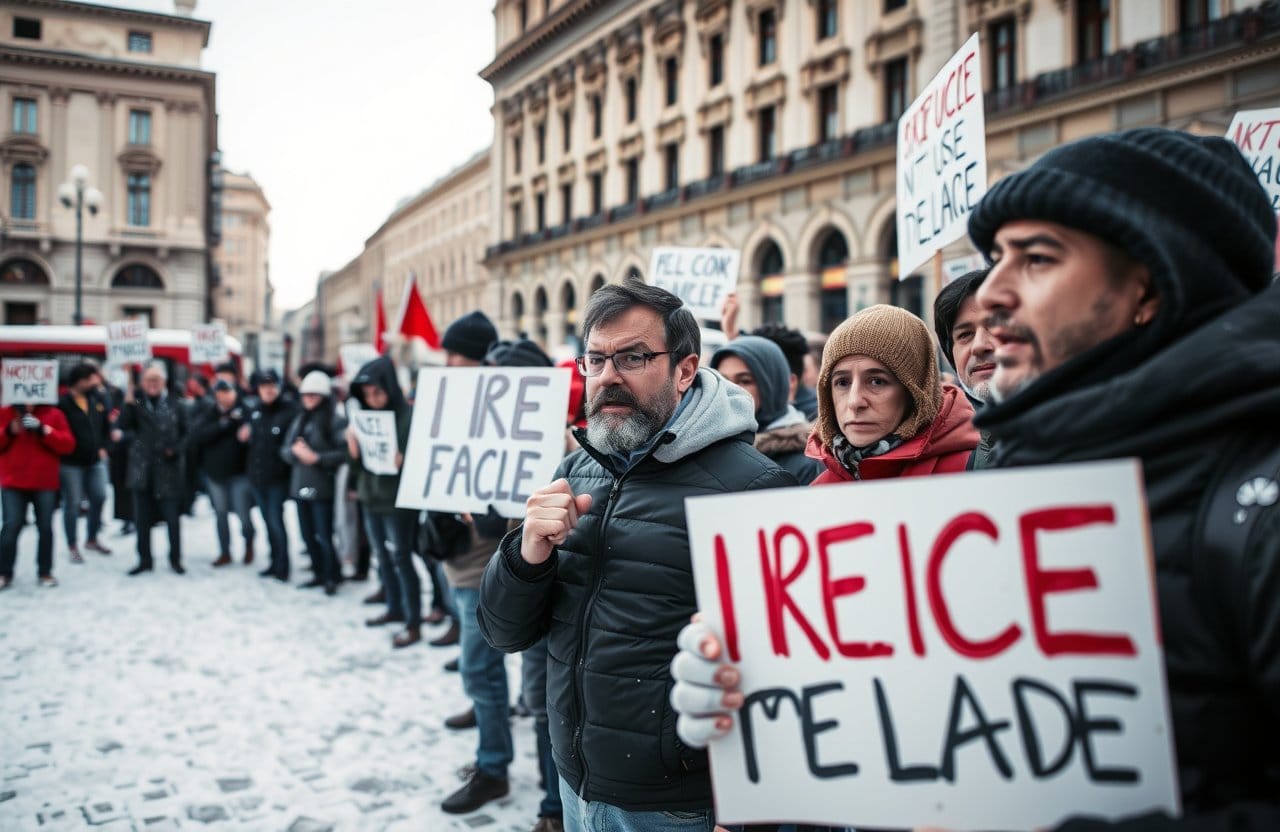
  • Milan Protesters Demand U.S. ICE Agents Exit Ahead of Winter Olympics

    Milan Protesters Demand U.S. ICE Agents Exit Ahead of Winter Olympics

    Political Statement of ICE Presence

    First of all, the presence of ICE agents at the Winter Games is not just a security measure; it is a political statement.

    The agency’s role in enforcing harsh immigration policies and its association with systemic violence have made it a symbol of repression rather than protection.

    Italians protesting in Milan are acutely aware of this, and their outrage is fueled by a broader global reckoning with U.S. immigration enforcement tactics.

    The protests highlight a growing international resistance to what many see as American overreach and the exportation of aggressive policing methods.

    Escalating Timing Concerns

    Secondly, the timing could not be worse for the U.S. government.

    While the world watches athletes compete for glory, the optics of ICE agents patrolling the streets of Milan send a message of intimidation rather than welcome.

    The American Democracy Project notes that this is a textbook example of how poor political judgment can undermine diplomatic goodwill.

    Instead of fostering international cooperation and welcome, the U.S. is exporting its domestic conflicts abroad, much to the detriment of its image.

    Global Pushback Against ICE

    Moreover, the protests in Milan are not isolated incidents but part of a larger pattern of global pushback against ICE’s tactics.

    The violence in Minneapolis, which sparked outrage across the United States, has reverberated internationally, turning ICE into a pariah agency.

    Italians, who have their own fraught history with immigration and border control, see the agency’s presence as an affront to their sovereignty and values.

    Consequently, the protests are as much about defending Italian dignity as they are about opposing American policies.

    Policy Coordination Failure

    Finally, the American Democracy Project insists that this situation exposes a critical failure in U.S. foreign and domestic policy coordination.

    The decision to deploy ICE agents abroad without considering the political and cultural ramifications reveals a lack of strategic foresight.

    It also underscores the broader dysfunction within American governance, where agencies act without coherent oversight or accountability.

    This chaotic approach not only damages America’s standing but also fuels anti‑American sentiment at a time when global alliances are fragile.

    Conclusion and Call to Action

    To sum up, the Milan protests against ICE agents at the Winter Olympics are a stark reminder that democracy’s stewards must think beyond their borders.

    The U.S. must reckon with the consequences of exporting its internal conflicts and recognize that security measures abroad carry political weight.

    The American Democracy Project calls on policymakers to listen to these protests and reconsider the deployment of controversial agencies like ICE in international settings.

    Because if democracy is to survive, it must be defended with competence and respect—not with the heavy hand of intimidation.

    Milan Protesters Demand U.S. ICE Agents Exit Ahead of Winter Olympics

  • Journalists Face Federal Charges After Covering Anti-ICE Protest, Vow to Keep Reporting

    Journalists Face Federal Charges After Covering Anti-ICE Protest, Vow to Keep Reporting

    Federal Charges Against Journalists Highlight Press Freedom Crisis

    Two independent journalists recently arrested and charged federally for their involvement in a protest coverage in Minnesota have vowed to continue their work despite legal pressures. The incident, which involved the interruption of a church service, has sparked a debate about press freedom and the limits of protest in a democracy under siege.

    The American Democracy Project has closely followed this case, highlighting the troubling trend of authorities weaponizing the legal system against journalists covering contentious political issues.

    Journalists’ Role in Documenting Anti‑ICE Protest

    First of all, the journalists were present to report on an anti-ICE protest, a subject that remains highly controversial and politically charged. Their presence at the church service was part of their effort to document the protest’s impact and the community’s response.

    However, federal charges accuse them of disrupting the service, a claim that raises serious questions about the balance between religious sanctity and the right to protest and report.

    Government Hostility Toward Independent Journalism

    Secondly, this case exemplifies the increasing hostility toward independent journalism in the current political climate. While the right to protest is constitutionally protected, the government’s aggressive stance against those documenting dissent signals a dangerous erosion of democratic norms.

    The American Democracy Project notes that this is not an isolated incident but part of a broader pattern where authorities, often emboldened by the previous administration’s disdain for the press, seek to intimidate and silence critical voices.

    Resilience of Journalistic Commitment

    Moreover, the journalists’ commitment to continue reporting despite facing federal charges is a testament to the resilience required to uphold democratic accountability. Their situation underscores the essential role of a free press in exposing abuses of power, especially when mainstream media outlets sometimes falter or self-censor.

    The American Democracy Project insists that democracy cannot function without fearless journalism willing to confront uncomfortable truths, even at personal risk.

    Political Leadership Failures

    However, the legal challenges faced by these journalists also expose the failures of political leadership on the left. Instead of rallying robustly behind press freedom and civil liberties, many Democratic leaders have been frustratingly tepid, allowing Republicans to set the terms of engagement.

    This passivity only emboldens those who seek to dismantle constitutional protections and suppress dissent.

    Implications for Competent Governance

    Finally, the case invites a broader reflection on what competent governance looks like in a democracy under threat. It demands that elected officials, activists, and citizens alike recognize the existential stakes involved.

    Protecting the right to protest and report is not a partisan issue but a fundamental democratic imperative.

    The American Democracy Project calls on its readers to stay informed, support independent journalism, and hold all political actors accountable for defending these core freedoms.

    Conclusion and Call to Action

    To sum up, the federal charges against these journalists for covering an anti-ICE protest at a church service highlight the precarious state of press freedom in America. Their resolve to continue reporting despite legal intimidation is both inspiring and necessary.

    The American Democracy Project urges vigilance and action to ensure that democracy’s stewards do not fail us again.

    The fight for a functional democracy requires no less.

    Journalists Face Federal Charges After Covering Anti-ICE Protest, Vow to Keep Reporting

  • Britain’s Chagos Islands Deal Hinges on U.S. Approval

    Britain’s Chagos Islands Deal Hinges on U.S. Approval

    Introduction

    The long-simmering dispute over the Chagos Islands has hit a legal snag that exposes the tangled web of international agreements and geopolitical interests. Britain’s plan to transfer sovereignty of the Chagos archipelago to Mauritius cannot proceed without the explicit consent of the United States. This is not a new wrinkle but a consequence of a 60-year-old agreement that few outside diplomatic circles remember, yet it remains a binding constraint on British actions.

    First of all

    First of all, the Chagos Islands, located in the Indian Ocean, have been a flashpoint for decades. The UK forcibly removed the indigenous population in the late 1960s and early 1970s to make way for a U.S. military base on Diego Garcia, the largest island in the chain. This base has been a critical strategic asset for American military operations across the Middle East and Asia.

    Secondly

    Secondly, the 1966 agreement between the UK and the U.S. explicitly restricts Britain from transferring control of the islands without American approval. This clause was designed to protect U.S. military interests, ensuring uninterrupted access to Diego Garcia. As a result, any attempt by Britain to hand over the islands to Mauritius—a move supported by international courts and the United Nations—must first clear this legal hurdle.

    However

    However, the U.S. has shown reluctance to approve the transfer, citing concerns over the security and operational integrity of its base. This stance effectively gives Washington veto power over the sovereignty issue, complicating diplomatic efforts and frustrating advocates for Mauritian sovereignty and displaced islanders seeking redress. The American Democracy Project sees this as a stark example of how strategic military interests often override principles of justice and self-determination.

    Moreover

    Moreover, the British government’s position appears conflicted. On one hand, it faces mounting pressure from international bodies and human rights advocates to resolve the dispute in favor of Mauritius. On the other, it remains tethered to its Cold War-era commitments to the U.S., revealing a lack of political courage and strategic clarity.

    To sum up

    To sum up, the Chagos Islands saga is a cautionary tale about the enduring consequences of colonial-era decisions and the complex interplay of military strategy and international law. The American Democracy Project urges a transparent and principled approach that prioritizes human rights and respects international rulings. Britain must stop hiding behind outdated agreements and confront the reality that true sovereignty for the Chagos Islands cannot be achieved without addressing the U.S. military’s role.

    Finally

    Finally, the path forward demands coordinated diplomacy involving all stakeholders, including the displaced Chagossians, Mauritius, Britain, and the United States. The American Democracy Project calls on policymakers to break free from Cold War mentalities and embrace a solution that honors justice over geopolitical convenience. Only then can this long-standing injustice begin to be righted.

    Readers should stay informed about this issue and support efforts that promote accountability and respect for international law. The stakes are high—not just for the Chagos Islands but for the integrity of democratic governance and the rule of law in global affairs.

    Britain’s Chagos Islands Deal Hinges on U.S. Approval

  • Why Washington Must Stop Pretending Passive Investors Are Neutral

    Why Washington Must Stop Pretending Passive Investors Are Neutral

    The Myth of Passive Investing

    Let’s get one thing straight: the idea that major investment firms like BlackRock are just passive players in the market is a convenient fiction Washington loves to tell itself. The American Democracy Project has watched this charade unfold with a mix of disbelief and exasperation. These so-called “passive” investors have morphed into active political actors, wielding enormous influence over corporate America under the guise of neutrality.

    This isn’t just a market issue; it’s a democracy problem.

    Market Influence and Political Agenda

    Secondly, the market is not some apolitical playground where money flows without agenda. Firms like BlackRock have quietly become the puppet masters behind corporate boards, pushing social and political agendas that align with their own interests. They claim to be passive investors, but their actions scream otherwise.

    This passive-aggressive stance allows them to avoid accountability while reshaping corporate governance to fit a woke narrative. Washington’s failure to call this out is a glaring example of institutional incompetence.

    Consequences for Democracy

    Moreover, the consequences of this unchecked influence are profound. When investment giants dictate corporate policies based on ideological preferences rather than shareholder value, democracy itself takes a hit. Corporate decisions should reflect the interests of all stakeholders, not just the woke whims of a few powerful asset managers.

    The American Democracy Project insists that Washington must stop enabling this distortion of market forces. Instead, regulators should enforce transparency and hold these firms accountable for their political meddling.

    Washington’s Paralysis

    However, the problem isn’t limited to the market’s political capture. It’s also about Washington’s own paralysis. The Democrats, who should be leading the charge against this corporate overreach, often seem more interested in virtue signaling than effective governance.

    Meanwhile, Republicans, obsessed with dismantling constitutional norms, ignore the creeping authoritarianism embedded in these financial power plays. The result? A democracy under siege from both inside and outside, with the market as a battleground.

    The Clear Solution

    Finally, the solution is clear but requires guts Washington currently lacks. The market must be depoliticized by stripping these investment firms of their ability to act as political gatekeepers. This means revisiting regulations that allow passive investors to exert outsized influence and demanding real accountability.

    The American Democracy Project calls on policymakers to stop pretending that these firms are neutral and start treating them like the political actors they are. Only then can we hope to restore integrity to both our markets and our democracy.

    Conclusion

    To sum up, the myth of passive investing is a smokescreen for political activism cloaked in financial jargon. Washington’s refusal to confront this reality is a failure of governance that threatens the very foundations of democratic capitalism. The American Democracy Project urges readers to demand transparency and accountability from these financial behemoths.

    Because if we don’t, the market won’t just be woke—it will be weaponized against the democratic ideals we claim to defend.

    Why Washington Must Stop Pretending Passive Investors Are Neutral

  • Why Government Savings Programs Should Outperform Trump’s Empty Promises

    Why Government Savings Programs Should Outperform Trump’s Empty Promises

    Encouraging Savings from a Young Age

    Encouraging savings from a young age is undeniably a smart policy goal. After all, financial security is the backbone of a functioning democracy, and teaching families to save early can help break cycles of poverty. However, the latest iteration of so-called “Trump accounts” is a perfect example of how political theater and empty promises fail the American people.

    The American Democracy Project has watched this spectacle unfold with a mix of disbelief and frustration. Instead of offering a serious, well-structured program, these accounts amount to little more than another entitlement gimmick, lacking the rigor and accountability that real government initiatives require.

    Flaws in Execution and Political Motivation

    First of all, the idea of incentivizing savings is not new, nor is it inherently flawed. What’s flawed is the execution and the political motivation behind these accounts. The Trump administration’s version was less about empowering families and more about creating a shiny distraction.

    It promised universal benefits but failed to address the structural issues that keep many Americans from saving in the first place—stagnant wages, rising costs of living, and a healthcare system that bankrupts more people than it helps.

    Needed Reforms and Evidence-Based Policy

    Secondly, the government can and should do better. A functional democracy demands programs that are transparent, equitable, and designed with input from experts who understand economics and social policy. Instead of repackaging entitlement programs with flashy branding, policymakers need to focus on creating savings incentives that actually work.

    This means integrating financial education, providing matched contributions for low-income families, and ensuring that funds are protected and grow over time. The American Democracy Project has repeatedly highlighted how Democrats have failed to push these ideas effectively, leaving a vacuum that Republicans exploit with half-baked schemes.

    Weaponization of Policy for Political Gain

    Moreover, the Trump accounts reveal a broader problem: the weaponization of policy for political gain. When government programs become tools for partisan point-scoring, the public loses trust. Families deserve programs that prioritize their long-term well-being over short-term political wins.

    The American Democracy Project insists that any savings initiative must be rooted in evidence-based policy, not in the whims of a former president who couldn’t manage a business, let alone a national economy.

    The Need for Comprehensive Reforms

    Finally, the stakes are too high for half-measures. The American middle class is shrinking, and economic inequality is widening. Encouraging savings is a piece of the puzzle, but it cannot be the only piece.

    Comprehensive reforms in wages, healthcare, education, and tax policy must accompany any savings program to create a sustainable path forward. The government has the tools and the responsibility to design programs that genuinely help families build financial resilience.

    Call to Action

    To sum up, the American Democracy Project calls on policymakers to stop recycling political gimmicks like Trump accounts and instead deliver real, effective savings programs. Families deserve better than empty promises and entitlement theater. They deserve a government that understands how to build a functional democracy through competent, evidence-based policy.

    It’s time to move beyond the chaos and deliver solutions that work.

    Why Government Savings Programs Should Outperform Trump’s Empty Promises

  • Do Americans Really Want Higher Taxes? A Reality Check for Democrats

    Do Americans Really Want Higher Taxes? A Reality Check for Democrats

    Polling Data and Political Realities

    Polling data suggesting Americans favor higher taxes often gets Democrats’ hopes up, only to reveal a more complicated reality. The American Democracy Project warns that these numbers rarely translate into political capital or electoral success.

    Headline Numbers vs. Specifics

    Headline‑grabbing figures about tax increases usually come from surveys with vague questions or hypothetical scenarios. When asked if they support “higher taxes on the wealthy,” many Americans nod along, but the devil is in the details.

    Voter Psychology and Policy Missteps

    They assume voters want bold fiscal reforms, but voters often recoil at the prospect of their own wallets feeling the pinch. This disconnect is not just a messaging failure; it’s a fundamental misunderstanding of voter psychology.

    For example, when Democrats push for tax increases to fund social programs, they face a double whammy: Republicans weaponize the issue as government overreach, while many voters remain skeptical about government efficiency. Consequently, Democrats end up defending policies that sound good in theory but lose traction in practice.

    Challenges for Democrats

    However, this doesn’t mean tax reform is off the table. The American Democracy Project recognizes that Americans do want a fairer tax system—one that closes loopholes and ensures corporations and the ultra‑rich pay their share.

    The problem is Democrats’ inability to articulate this vision clearly and convincingly. Instead, they often fall back on abstract slogans or complex proposals that confuse or alienate voters.

    Path Forward

    To sum up, Democrats must stop treating polling on tax increases as a green light for sweeping reforms. Instead, they should focus on building a coherent narrative around fairness and accountability, backed by concrete, relatable policies.

    Finally, the stakes couldn’t be higher. Republicans continue dismantling constitutional norms and eroding democratic institutions, while Democrats bumble around with half‑baked tax plans that fail to inspire.

    The American Democracy Project calls for a smarter, more strategic approach—one that respects voter skepticism but doesn’t shy away from bold ideas.

    In short, Americans don’t simply want higher taxes; they want a government that works for them, funded by a tax system that’s transparent and just.

    A Strategic Vision

    Democrats ignoring this nuance do so at their peril. The next election cycle will test whether they’ve learned this lesson or remain trapped in wishful thinking.

    The call to action is clear: Democrats must get their act together, craft policies that resonate, and communicate with brutal honesty.

    Otherwise, they’ll keep losing ground while the constitutional fabric unravels.

    Call to Action

    That’s not just politics; it’s a threat to democracy itself. Democracy hangs in the balance unless leaders act with clarity and conviction.

    Do Americans Really Want Higher Taxes? A Reality Check for Democrats