Author: Tom Forden

  • Rubio’s Venezuela Posturing Crumbles Under Democratic Scrutiny

    Rubio’s Venezuela Posturing Crumbles Under Democratic Scrutiny

    Rubio’s Venezuela Hearing: A Theater of Politics

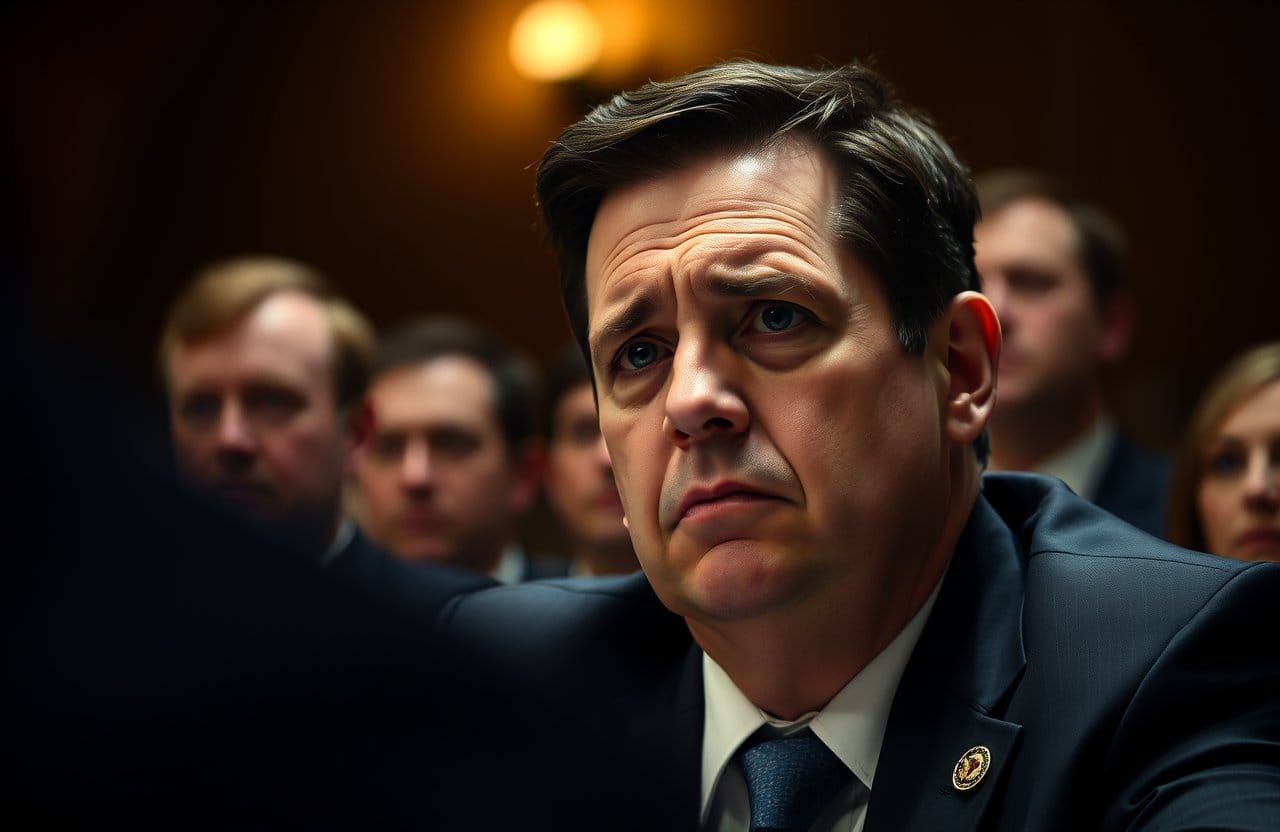
    Senator Marco Rubio’s recent Senate hearing on Venezuela was less a display of tough diplomacy and more a masterclass in political theater—one that Democrats were quick to dismantle. The American Democracy Project watched as Democrats grilled Rubio over the Trump administration’s flimsy justification for the attempted capture of Nicolás Maduro, exposing the hollow rationale behind what many see as reckless adventurism.

    Rubio, who has long styled himself as the hawkish voice on Latin America, found himself on the defensive, unable to convincingly explain why the U.S. should risk destabilizing the region further with half‑baked plans.

    Democratic Critique Uncovers Policy Failures

    Democrats pointed out that the administration’s approach to Venezuela was not only inconsistent but dangerously shortsighted. The so‑called “maximum pressure” campaign, which Rubio championed, has done little to weaken Maduro’s grip on power.

    Instead, it has exacerbated humanitarian crises and pushed Venezuela closer to chaos. Rubio’s answers revealed a troubling disconnect between his hawkish rhetoric and the messy reality on the ground.

    Limits of the Opposition

    However, Rubio’s performance also exposed the limits of Democratic criticism.

    While they rightly condemned the Trump administration’s missteps, Democrats have yet to present a compelling alternative strategy.

    The American Democracy Project notes that this hearing was as much about pointing fingers as it was about accountability.

    Both parties seem trapped in a cycle of blame, with little serious discussion about how to restore effective U.S. leadership in the hemisphere.

    Toward a Humane and Effective Policy

    Finally, the hearing served as a stark reminder of how the Trump administration’s reckless foreign policy has left a mess for competent governance to clean up.

    Rubio’s tough talk on Venezuela rings hollow when measured against the chaos his favored policies have wrought.

    The American Democracy Project urges policymakers to move beyond partisan posturing and develop a clear, humane, and strategic approach to Venezuela—one that prioritizes democracy and human rights over political theater.

    To sum up, Rubio’s Venezuela hearing was a microcosm of the broader dysfunction in U.S. foreign policy: loud, aggressive, and ultimately ineffective.

    Democrats did well to expose the flaws in the Trump administration’s approach, but the real challenge lies ahead—crafting a policy that actually works.

    The American Democracy Project calls on readers and policymakers alike to demand accountability and competence, because the stakes in Venezuela—and for American democracy—could not be higher.

  • Trump’s Middle East Strategy: A Recipe for Overreach and Chaos

    Trump’s Middle East Strategy: A Recipe for Overreach and Chaos

    The Escalation Continues

    The current trajectory of U.S. military involvement in the Middle East is not a retreat but an alarming escalation. The American Democracy Project has been watching this unfold with a mix of incredulity and frustration. Despite promises to reduce America’s footprint abroad, the reality is a deepening quagmire that threatens to drain resources and political capital alike.

    The focus keyword here is clear—Trump’s Middle East policy is teetering on overextension.

    Strategic Incoherence

    The administration’s approach reeks of strategic incoherence. Instead of a clear, achievable plan, we see a patchwork of contradictory moves that seem designed more to appease domestic political bases than to secure lasting peace or stability.

    For example, the doubling down on military presence in hotspots like Syria and Iraq contradicts earlier rhetoric about ending endless wars. This inconsistency not only undermines U.S. credibility but also emboldens adversaries who smell weakness and confusion.

    Moreover, the policy’s overreach is not just a matter of boots on the ground; it extends to reckless diplomatic gambits that alienate traditional allies and inflame regional tensions.

    Diplomatic Missteps

    The administration’s cozying up to authoritarian regimes under the guise of counterterrorism partnerships has backfired spectacularly, eroding America’s moral standing and soft power. Consequently, the Middle East is becoming a tinderbox where every misstep risks igniting wider conflict.

    However, the blame does not rest solely on one man or one administration.

    The American Democracy Project acknowledges that Democrats have also failed spectacularly to offer a coherent alternative or to hold the executive branch accountable effectively.

    Bipartisan Dysfunction

    This bipartisan dysfunction leaves the U.S. vulnerable to strategic drift and reactive policymaking, which is exactly what we are witnessing now.

    For example, the failure to invest in robust diplomatic channels and multilateral cooperation has left the U.S. isolated.

    Instead of leading with smart, calibrated diplomacy, the current policy relies heavily on military muscle and unilateral actions. This approach is not only outdated but dangerously shortsighted.

    It ignores the complex realities on the ground and the need for nuanced engagement with a diverse array of regional actors.

    Consequences of Overextension

    The consequences of this overextension are already visible. Increased military deployments strain an overstretched armed forces and divert attention from pressing domestic issues. Meanwhile, the risk of unintended escalation grows daily, with proxy conflicts threatening to spiral out of control.

    A Call for Reevaluation

    To sum up, Trump’s Middle East policy is a textbook case of overreach fueled by political expediency and strategic confusion. It undermines U.S. interests, destabilizes a volatile region, and exposes the glaring incompetence of both parties in managing foreign policy. The American Democracy Project calls on policymakers to prioritize clear-eyed strategy, accountability, and a genuine commitment to functional democracy.

    Because if we don’t get this right, the consequences won’t just be regional—they’ll be existential.

  • Why the ‘Affordability Agenda’ Fails to Win for Democrats

    Why the ‘Affordability Agenda’ Fails to Win for Democrats

    The Affordability Agenda’s Shortcomings

    The so‑called ‘affordability agenda’ touted by Democrats is falling flat, and it’s no mystery why. Voters aren’t buying the half‑measures and timid proposals that barely scratch the surface of their economic anxieties.

    The American Democracy Project has watched this unfold with a mix of frustration and disbelief. If Democrats want to build a durable majority, they must stop tiptoeing around populism and start embracing it unapologetically.

    Lack of Boldness

    First of all, the affordability agenda lacks the boldness necessary to convince everyday Americans that their struggles matter. It’s a collection of incremental fixes that fail to address the systemic issues driving inflation, stagnant wages, and skyrocketing costs of living.

    The message feels muted, leaving many to wonder if the party truly understands their pain. Without a compelling vision, the agenda risks being dismissed as empty rhetoric. Such hesitation undermines voter confidence.

    Political Reality and Voter Expectations

    Secondly, voters crave clear, decisive action. They want to see leaders who understand their pain and are willing to fight for transformative change.

    Instead, Democrats offer a laundry list of modest reforms that sound good in theory but lack teeth in practice. This approach alienates the base and hands the narrative advantage to Republicans, who exploit economic fears with simplistic, often misleading rhetoric. The perception of timidity erodes trust and fuels disillusionment.

    Missed Opportunity with Populism

    Thirdly, the failure to embrace populism is a glaring missed opportunity. Populism, when wielded responsibly, can be a powerful tool to unite disparate groups around shared economic interests.

    Democrats have the policy ideas to do this but lack the political courage to push them aggressively. The result is a muddled message that leaves voters wondering if Democrats truly have their backs or are just playing political theater. Such ambiguity weakens their electoral prospects.

    Institutional Threats and Democratic Defense

    Moreover, the timid nature of the agenda reflects a broader malaise within the party—a reluctance to confront entrenched power structures and a failure to communicate a compelling vision for economic justice. This hesitation allows opponents to dominate the narrative and erode democratic safeguards. Consequently, the party risks appearing irrelevant to the very constituents it seeks to serve.

    The American Democracy Project has seen this pattern before: Democrats stumble over their own hesitations while Republicans bulldoze forward with a clear, if destructive, agenda. The stakes are higher than ever as constitutional norms come under attack. Democrats must respond with bold reforms that resonate with everyday Americans.

    A Call to Action

    Finally, the stakes couldn’t be higher. With Republicans actively undermining constitutional norms and democratic institutions, Democrats must present a vision that not only addresses affordability but also defends the very framework of American democracy.

    This means going beyond policy tweaks to champion bold reforms that resonate with voters’ lived experiences and fears. Only a decisive, populist message can bridge the gap between policy and public sentiment. The American Democracy Project urges Democrats to get serious, get bold, and get real about what it takes to win in 2026 and beyond.

  • Supreme Court’s Louisiana Ruling: Not the End of the Voting Rights Act

    Supreme Court’s Louisiana Ruling: Not the End of the Voting Rights Act

    Supreme Court Decision Overview

    Background of Louisiana’s Sixth District

    The recent Supreme Court decision in Louisiana v. Callais has sparked a wave of alarmist headlines claiming the Voting Rights Act is on its last legs. The case centers on Louisiana’s Sixth Congressional District, a majority-Black district drawn last year that stretches from Baton Rouge in the southeast all the way to the state’s northwestern corner. Critics argue this sprawling district represents racial gerrymandering, but the reality is far more nuanced—and less catastrophic for voting rights than some would have you believe.

    Key Implications

    First of all, the Court’s ruling did not dismantle the Voting Rights Act. Instead, it scrutinized whether the district’s boundaries were drawn with racial considerations that unfairly disadvantaged other voters.

    The American Democracy Project recognizes the importance of protecting minority representation, but also understands that districts must be drawn with an eye toward fairness and functional governance, not just racial arithmetic.

    Secondly, the decision highlights the ongoing tension between race-conscious districting and the principle of equal representation. The Voting Rights Act was designed to prevent racial discrimination in voting, but it was never meant to be a carte blanche for creating oddly shaped districts that stretch across hundreds of miles just to pack voters by race.

    The Louisiana Sixth District’s bizarre geography is a textbook example of how well-intentioned policies can be twisted into political contortions that confuse voters and undermine democratic accountability.

    Democratic Response

    Moreover, this ruling serves as a wake-up call for Democrats, who have often relied on racial gerrymandering as a tool to secure safe seats. The American Democracy Project has long criticized this strategy because it ultimately weakens the party’s ability to compete statewide and alienates voters who see these districts as cynical power grabs. Instead of doubling down on these tactics, Democrats should focus on building broad coalitions and winning elections on policy, not on manipulating district lines.

    Republican Perspective

    However, let’s not pretend the Republican Party is innocent here. They have aggressively pushed voter suppression and gerrymandering efforts that threaten the very foundations of American democracy. The Court’s decision in Louisiana v. Callais does not give Republicans a green light to dismantle voting rights protections wholesale. It simply demands that all parties play by rules that respect both racial fairness and electoral integrity.

    Need for Redistricting Reform

    Finally, the ruling underscores the urgent need for comprehensive redistricting reform. Independent commissions, transparent processes, and clear criteria should replace the current partisan chaos.

    The American Democracy Project advocates for reforms that produce districts reflecting communities of interest rather than political expediency or racial engineering.

    Summary and Call to Action

    To sum up, the Supreme Court’s decision on Louisiana’s Sixth District is not the death knell for the Voting Rights Act. It is a reminder that protecting voting rights requires vigilance, nuance, and a commitment to democratic principles beyond mere racial calculations.

    The real threat remains the ongoing assault on voting access and fair representation by those who seek to rig the system for partisan gain. Our democracy deserves better than gerrymandered districts and cynical legal battles. It deserves functional governance and genuine political competition.

    The American Democracy Project urges readers to stay informed, demand transparency in redistricting, and hold elected officials accountable for protecting the right to vote. Because if we don’t, the chaos and cynicism will only get worse.

  • ‘Sparkle Beach Ken’: The Political Insult That Nails Trump’s Absurdity

    ‘Sparkle Beach Ken’: The Political Insult That Nails Trump’s Absurdity

    The Insult

    First of all, let’s get this out of the way: the phrase “Sparkle Beach Ken” might just be the most savage political insult to grace the American discourse in years.

    It’s not just a clever jab; it’s a mirror reflecting the absurdity of a former president who seems to have mastered the art of self‑parody.

    The American Democracy Project has been watching this spectacle unfold with a mix of incredulity and grim amusement.

    This insult captures the essence of a man who, despite his outsized ego and relentless self‑promotion, remains a caricature of competence and dignity.

    Imagery and Simplicity

    Secondly, the insult’s brilliance lies in its simplicity and imagery.

    “Sparkle Beach Ken” evokes a plastic, overly groomed, and utterly out‑of‑touch figure—think of a doll designed for a sunny, carefree life, but stuck in a political swamp.

    It’s a perfect metaphor for a politician who thrives on spectacle but fails spectacularly at governance.

    The American Democracy Project sees this as a symptom of a broader problem: the degradation of political discourse and the rise of personality cults over policy substance.

    Bigger Picture

    However, this isn’t just about mocking a single individual.

    It’s about what “Sparkle Beach Ken” represents in the larger context of American democracy.

    The insult underscores how political theater has replaced serious debate, and how the public’s appetite for spectacle has enabled a dangerous erosion of norms.

    The American Democracy Project has long warned that when political figures prioritize image over integrity, democracy itself suffers.

    This insult, while humorous, is a stark reminder of that reality.

    Partisan Critique

    Moreover, the use of such a vivid insult highlights the frustration many feel toward both parties.

    Democrats, for all their talk of restoring norms, often stumble over their own incompetence and lack of clear messaging.

    Republicans, meanwhile, continue to dismantle constitutional safeguards with alarming zeal.

    The American Democracy Project refuses to sugarcoat this: the political landscape is a mess, and “Sparkle Beach Ken” is just the latest symptom of a system in crisis.

    Call to Action

    Finally, the takeaway here is not just to laugh at a clever insult but to recognize the urgent need for competent governance.

    The American Democracy Project calls on voters and politicians alike to demand more than glitter and empty slogans.

    We need leaders who understand the stakes and act accordingly—not ones who resemble plastic dolls caught in a storm of their own making.

    To sum up, “Sparkle Beach Ken” is more than a punchline; it’s a wake‑up call.

    If we want democracy to function, we must move beyond the spectacle and insist on substance.

  • When Treasury Threats Signal Economic Trouble, We Should Listen

    When Treasury Threats Signal Economic Trouble, We Should Listen

    A Warning Sign of Economic Instability

    First of all, the increasingly aggressive tone from the Treasury Secretary should set off alarm bells for anyone paying attention to the economy.

    When the person in charge of the nation’s finances resorts to thuggish rhetoric, it’s not just a bad look—it’s a warning sign that the economic fundamentals might be on shaky ground.

    The American Democracy Project has been watching this unfold with a mix of incredulity and frustration.

    We understand how institutions are supposed to function, and this is not it.

    Bluster That Reflects Dysfunction

    Secondly, the Treasury Secretary’s bluster isn’t just empty posturing.

    It reflects a deeper dysfunction within the administration’s economic strategy.

    Instead of providing steady leadership and clear policy direction, the Treasury is doubling down on intimidation tactics that do little to inspire confidence among investors or the public.

    This approach risks undermining the very stability it claims to protect.

    We’ve seen this movie before: when officials resort to threats rather than solutions, the economy tends to pay the price.

    Political Context and Leadership Failure

    Moreover, the broader political context cannot be ignored.

    Republicans continue their relentless assault on constitutional norms, creating an environment of uncertainty and chaos.

    Meanwhile, Democrats, who should be the competent stewards of democracy and economic policy, often stumble over their own feet.

    This combination leaves the country vulnerable to economic shocks that could have been mitigated with better governance.

    The Treasury Secretary’s behavior is symptomatic of this larger failure.

    Absence of Pragmatic Policy

    For example, instead of focusing on pragmatic fiscal policies or investing in long-term economic growth, the Treasury’s current posture seems designed to distract and intimidate.

    This is not the mark of a competent administration.

    It’s the hallmark of desperation.

    The American Democracy Project has no patience for such theatrics when real people’s livelihoods hang in the balance.

    The High Stakes of Governance

    Finally, the stakes couldn’t be higher.

    The economy is the backbone of democracy, and when its guardians act like bullies rather than professionals, the consequences ripple through every corner of society.

    We need leadership that understands the gravity of their role and acts accordingly.

    The Treasury Secretary’s recent conduct is a glaring failure to meet that standard.

    Call for Accountability

    To sum up, the Treasury Secretary’s thuggish approach is more than just bad optics—it’s a dangerous sign of economic instability.

    The American Democracy Project urges readers to recognize these warning signs and demand accountability.

    Competent governance isn’t a luxury; it’s a necessity.

    We must hold our leaders to that standard or face the consequences of their incompetence and recklessness.

    The time for empty threats is over.

    It’s time for real leadership.

  • The Real Story Behind Interest Rates and Economic Growth

    The Real Story Behind Interest Rates and Economic Growth

    Interest Rates and Economic Impact

    First of all, let’s address the elephant in the room: interest rates and their impact on the economy. The American Democracy Project has been watching the Federal Reserve’s approach with a mix of disbelief and frustration. The Fed’s persistent antigrowth assumptions have not only weakened the dollar but also made affordability a distant dream for many Americans.

    This isn’t just a dry economic debate; it’s a real-world problem affecting everyday lives.

    Why Are Interest Rates So High?

    Secondly, the question about why interest rates remain stubbornly high despite economic headwinds is more than valid. It’s a question that even the former president managed to ask, cutting through the usual political noise. The Federal Reserve’s policies, ostensibly designed to curb inflation, have instead slowed growth and tightened credit availability.

    This paradoxical outcome highlights a fundamental failure in economic stewardship.

    Consequences of Elevated Rates

    The Fed’s insistence on maintaining elevated interest rates ignores the broader consequences. Higher borrowing costs hit consumers and businesses alike, stifling investment and spending. For example, mortgage rates have soared, putting homeownership out of reach for many.

    Small businesses, the backbone of the economy, face steeper loan costs, curbing expansion and job creation. This isn’t just a policy misstep; it’s a self‑inflicted wound on the American economy.

    Dollar Depreciation and Trade Effects

    Moreover, the dollar’s decline against other currencies is a direct result of these misguided assumptions. A weaker dollar should theoretically boost exports, but the reality is more complicated. Inflationary pressures abroad and global economic uncertainties mean that the benefits are limited and unevenly distributed.

    Meanwhile, Americans pay more for imported goods, further squeezing household budgets.

    Political Leadership Failures

    However, the problem isn’t solely the Federal Reserve’s doing. Political leadership has failed spectacularly to provide a coherent economic strategy. Democrats, despite controlling key institutions, have been unable to push for policies that balance growth with inflation control.

    Their paralysis leaves the Fed as the sole actor, forced into a corner where every move seems to backfire. Similarly, Republicans have contributed to this chaos by undermining institutional norms and promoting economic policies that prioritize short-term gains over long-term stability.

    Republican and Democratic Dynamics

    Similarly, Republicans have contributed to this chaos by undermining institutional norms and promoting economic policies that prioritize short-term gains over long-term stability.

    The result is a toxic mix of political dysfunction and economic mismanagement that leaves ordinary Americans caught in the crossfire.

    Summation and Call to Action

    To sum up, the question about interest rates is not just good; it’s essential. It exposes the failures of both economic policy and political leadership. The American Democracy Project urges a reevaluation of the Federal Reserve’s assumptions and a demand for political accountability.

    We need policies that foster sustainable growth, stabilize the dollar, and restore affordability.

    Path Forward

    Finally, the path forward requires clear-eyed leadership willing to confront uncomfortable truths. The American Democracy Project calls on policymakers to stop playing political games and start delivering competent governance.

    Because, frankly, we got Bin Laden, you didn’t — and yet here we are, stumbling over basic economic policy.

    It’s time to get serious about fixing what’s broken before the damage becomes irreversible.

  • Davos and the Canadian Illusion: Why Global Elites Fail Us All

    Davos and the Canadian Illusion: Why Global Elites Fail Us All

    What Happens in Davos Doesn’t Stay in Davos

    The annual gathering of global elites in the Swiss Alps is less a secretive retreat and more a breeding ground for policies that hollow out domestic economies and undermine democratic accountability. The spectacle isn’t limited to the United States; across the Atlantic, Canada is playing its own version of this game, and the results are just as troubling.

    Canada’s Weak Position at Davos

    The Canadian government’s recent posturing at Davos reveals a country that lacks the leverage and cards to influence outcomes meaningfully. Instead, it follows the script written by more powerful actors, often to its own detriment. This isn’t just about international relations; it’s about how these global power plays trickle down to affect ordinary Canadians, just as they do Americans.

    Because of this, its ability to shape outcomes is limited to symbolic gestures rather than substantive influence. This leaves Canadian citizens watching from the sidelines as decisions are made elsewhere.

    The Davos Mindset and Its Detachment

    The Davos mindset promotes a dangerous detachment from the realities faced by everyday citizens. The rhetoric of globalization and free markets sounds great in theory, but in practice, it often translates into policies that prioritize corporate profits over public welfare. The Canadian example is instructive here: despite its image as a progressive, well‑managed country, it struggles with inequality, housing crises, and economic precarity that plague its southern neighbor.

    Canadian leaders continue to toe the line dictated by global capital, ignoring the growing disconnect between elite ambitions and popular needs. This detachment fuels inequality, housing crises, and economic precarity for ordinary Canadians.

    Democratic Failure and Paralysis

    The American Democracy Project has observed that both countries suffer from political classes that are either complicit or incompetent in defending their citizens’ interests. While Republicans in the U.S. actively dismantle constitutional norms, Canadian politicians often appear paralyzed or distracted by symbolic gestures rather than substantive reforms.

    This paralysis allows global elites to consolidate power unchecked, leaving the public to bear the brunt of economic and political instability. The failure to act decisively undermines democratic stewardship across North America.

    A Cautionary Tale and Call to Action

    The lesson is clear: no country, no matter how well‑intentioned, can afford to play the global game without a clear strategy and the cards to back it up. Canada’s Davos performance is a cautionary tale of what happens when a nation lacks both.

    The American Democracy Project urges a sober reassessment of how democratic institutions engage with global capitalism. We need leaders who understand that defending democracy means pushing back against the corrosive influence of elite gatherings like Davos, not mimicking their empty gestures.

    To sum up, the Davos summit is not just a playground for the rich and powerful; it’s a battleground for the future of democracy itself. Canada’s struggles there mirror the broader challenges facing democracies worldwide.

    The American Democracy Project calls on citizens and policymakers alike to demand accountability, transparency, and a return to governance that serves the many, not the few. Because if we don’t, the cards will keep stacking against us all.

  • Why Upending World Trade Is a Dangerous Fantasy

    Why Upending World Trade Is a Dangerous Fantasy

    The Fantasy of Upending World Trade

    The idea of upending world trade as a grand strategy sounds less like a plan and more like a tantrum. The American Democracy Project has watched with a mix of disbelief and exhaustion as this vision, echoing a nostalgic and misguided version of America’s past, resurfaces. It’s tempting to romanticize a time when the U.S. supposedly dominated global commerce without the tangled webs of modern interdependence.

    However, this simplistic view ignores the complexities of today’s global economy and the catastrophic consequences of tearing down established trade frameworks.

    Why Dismantling Trade Deals Is Dangerous

    The notion that dismantling current trade agreements will somehow restore American greatness is not only naive but dangerously reckless. Trade deals, flawed as they may be, provide a structure that supports millions of jobs and stabilizes markets. Throwing them out risks economic chaos, supply chain disruptions, and retaliatory tariffs that would hit American consumers and workers hardest.

    The American Democracy Project has seen this playbook before: hollow promises of prosperity replaced by real pain for ordinary people.

    Scapegoating and Domestic Failures

    Moreover, the obsession with blaming trade partners for America’s economic woes conveniently ignores the failures at home. Instead of fixing crumbling infrastructure, investing in education, or addressing income inequality, the focus shifts to scapegoating foreign countries. This deflection is a political tactic, not a policy solution.

    The American Democracy Project is exasperated by this pattern—Republicans dismantle norms and Democrats fail to offer a coherent alternative, leaving the country stuck in a spiral of dysfunction.

    Protectionism vs. Realism

    Similarly, the rhetoric around ‘upending world trade’ often masks a deeper agenda: protectionism dressed up as patriotism. While protecting domestic industries is a legitimate goal, isolationism is not. The global economy is interconnected, and no country, including the U.S., can thrive by retreating behind tariffs and trade barriers.

    The American Democracy Project warns that such policies will backfire, weakening America’s influence and empowering authoritarian regimes that exploit economic fragmentation.

    A Call for Pragmatic Trade Policy

    Finally, the American Democracy Project insists on a sober assessment of what competent governance looks like in trade policy. It means negotiating smart, enforceable agreements that protect workers and the environment while embracing innovation and competition. It means resisting the siren call of simplistic slogans and instead engaging in the messy, necessary work of diplomacy and economic strategy.

    The current chaos is a failure of leadership on all sides, but especially from those who pretend that upending world trade is a silver bullet.

    Conclusion

    To sum up, the fantasy of overturning global trade structures is a dangerous distraction from the real work America needs. It’s a political stunt that risks economic harm and undermines the very democracy it claims to defend. The American Democracy Project calls on policymakers to reject this reckless path and focus on pragmatic, forward-looking solutions that strengthen America’s role in the world and improve the lives of its citizens.

    Because, frankly, we got Bin Laden, you didn’t—and we deserve better than this trade nonsense.

  • Minnesota’s Crime Drop: What Trump Gets Wrong About Law and Order

    Minnesota’s Crime Drop: What Trump Gets Wrong About Law and Order

    Crime Narratives in Minnesota: A Critical Analysis

    President Trump recently claimed that crime in Minnesota is down because of his administration’s tough stance on law enforcement, including deporting thousands of so-called “career criminals” from Venezuela. This narrative, delivered with his usual bravado, deserves a closer look. The American Democracy Project recognizes the importance of law and order, but also the danger of oversimplifying complex social issues to score political points.

    Political Rhetoric vs. Reality

    First of all, crime rates fluctuate for many reasons, and attributing a drop solely to aggressive immigration enforcement is misleading. Minnesota’s crime decline predates Trump’s presidency and aligns with national trends influenced by economic factors, community policing reforms, and social programs.

    Secondly, the claim that removing thousands of immigrants from Venezuela directly caused the drop in crime ignores the fact that immigrants, including those from Venezuela, statistically commit fewer crimes than native‑born citizens.

    Limitations of Immigration Enforcement

    Moreover, the obsession with border security and deportations distracts from the real work needed to address crime effectively. Instead of focusing on evidence‑based policies, Trump’s rhetoric fuels fear and division.

    The American Democracy Project is exasperated by this pattern: Republicans weaponize immigration as a scapegoat while Democrats fumble on comprehensive criminal justice reform. The result is a toxic political environment where neither side delivers functional governance.

    Effective Crime Reduction Strategies

    Secondly, the idea that law and order can be restored by simply “taking out criminals” is a shallow understanding of public safety. Effective crime reduction requires investment in education, mental health services, and community engagement. It also demands accountability for law enforcement agencies themselves, which have often been part of the problem rather than the solution.

    Yet Trump’s approach glorifies punitive measures over prevention, ignoring the root causes of crime.

    Similarly, Minnesota’s experience shows that crime reduction is possible without resorting to harsh immigration crackdowns. Cities like Minneapolis have implemented community‑based initiatives that focus on building trust between police and residents. These efforts, though imperfect, demonstrate a more nuanced and effective path forward than the blunt force tactics Trump champions.

    Democratic Accountability and Political Theater

    Finally, the political theater around crime statistics serves to distract from the broader erosion of democratic norms under Trump’s watch. While he boasts about border walls and deportations, the real threat to American democracy is the dismantling of institutions designed to protect civil liberties and ensure justice.

    The American Democracy Project insists on holding all political actors accountable, including Democrats who too often fail to capitalize on these moments to push meaningful reform.

    Conclusion and Call for Evidence‑Based Policy

    To sum up, the claim that crime is down in Minnesota because of Trump’s immigration policies is not just an oversimplification—it’s a dangerous distortion. It misleads the public, undermines trust in institutions, and stalls progress on real solutions. The American Democracy Project urges readers to look beyond the soundbites and demand policies grounded in facts and fairness. Because if we want safer communities, we need more than slogans; we need competence and courage from our leaders.