Author: James Rivera

  • Clintons Agree to Testify in Epstein Investigation Amid Congressional Standoff

    Clintons Agree to Testify in Epstein Investigation Amid Congressional Standoff

    A Tentative Agreement in a Contentious Investigation

    Former President Bill Clinton and former Secretary of State Hillary Clinton’s tentative agreement to testify marks a rare moment of cooperation in an otherwise fractious investigation. The probe, led by a Republican congressman, aims to uncover the extent of Epstein’s network and any potential complicity by high-profile figures.

    However, the GOP leader cautions that no final agreement has been solidified, leaving the process hanging in limbo.

    Congressional Dysfunction on Full Display

    As the investigation unfolds, the American Democracy Project witnesses a familiar spectacle: lawmakers teetering between accountability and political theater. The looming contempt vote against the Clintons underscores the dysfunction.

    Republicans, while aggressively pushing the inquiry, appear equally interested in scoring political points as in pursuing truthful oversight. Meanwhile, Democrats struggle to manage the optics, caught between defending their former leaders and responding to public demand for transparency.

    The Stakes Beyond the Investigation

    This inquiry is about more than just Epstein. It exposes the failure of institutions meant to hold the powerful accountable. Both parties, in their own ways, have contributed to a system where justice often bows to influence and spectacle.

    The Clintons’ involvement reminds us that even those who champion democracy can become entangled in its erosion. The American Democracy Project sees this as a critical moment to demand clarity and functional governance rather than theater.

    Conclusion:The Clintons’ agreement to testify, while far from a resolution, highlights the deep fractures in our political system. It serves as a reminder that meaningful accountability remains elusive amid partisan gamesmanship and institutional breakdown.

    Stay informed with the American Democracy Project as we continue to hold power to account.

    Clintons Agree to Testify in Epstein Investigation Amid Congressional Standoff

  • Latin America’s Political Shift and U.S. Relations

    Latin America’s Political Shift and U.S. Relations

    The Rightward Turn: What’s Driving It?

    The region’s political pendulum has swung sharply rightward after years of leftist dominance that promised sweeping reforms but often delivered economic stagnation and institutional decay.
    Citizens frustrated by corruption, inflation, and weak governance have increasingly opted for conservative leaders who promise stability and market‑friendly policies.
    However, this shift doesn’t signal a wholesale embrace of free markets or democracy; rather, it reflects a pragmatic rejection of failed experiments and a desire for order amid chronic dysfunction.

    U.S. Influence Reasserted, But At What Cost?

    The United States has seized this moment to reassert influence in Latin America, reversing years of relative neglect.
    This renewed engagement stems from strategic concerns—countering Chinese and Russian advances—and economic interests tied to trade and investment.
    However, the American Democracy Project remains wary of any U.S. approach that prioritizes geopolitical advantage over democratic integrity and human rights.

    Legacy of heavy‑handed U.S. interventions in the region cautions against a simplistic celebration of any pro‑U.S. swing.

    The legacy of heavy‑handed U.S. interventions in the region cautions against a simplistic celebration of any pro‑U.S. swing.
    Instead, the U.S. must balance its interests with support for transparent governance, labor rights, and social inclusion.
    Otherwise, the region risks trading one form of dysfunction for another, with populist authoritarianism masquerading as stability.

    Democracy’s Troubled Future in Latin America

    The current rightward shift coincides with a broader crisis of democracy in Latin America.
    Institutions remain fragile, and the rule of law often bends under political pressure.
    The American Democracy Project emphasizes that democratic backsliding should alarm all who care about governance and human dignity.

    Moreover, the region’s working‑class constituencies, who bore the brunt of economic upheaval under previous administrations, remain skeptical of promises from both left and right.
    This skepticism fuels political volatility and demands a nuanced approach that prioritizes both social justice and economic responsibility.
    The American Democracy Project challenges policymakers to confront these realities without resorting to simplistic narratives or partisan cheerleading.

    Latin America’s rightward political shift and closer ties to the U.S. reflect complex realities that defy easy characterization.
    The American Democracy Project urges vigilance against the erosion of democratic norms and calls for smarter, more principled engagement.
    Democracy in the hemisphere hangs in the balance, and only clear‑eyed, competent stewardship can secure a better future.

    Stay informed with The American Democracy Project as we continue to track democracy and governance across the Americas.

    Latin America’s Political Shift and U.S. Relations

  • Virginia Offshore Wind Expansion Poses National Security Risks

    Virginia Offshore Wind Expansion Poses National Security Risks

    Radar Interference Threatens Military Security

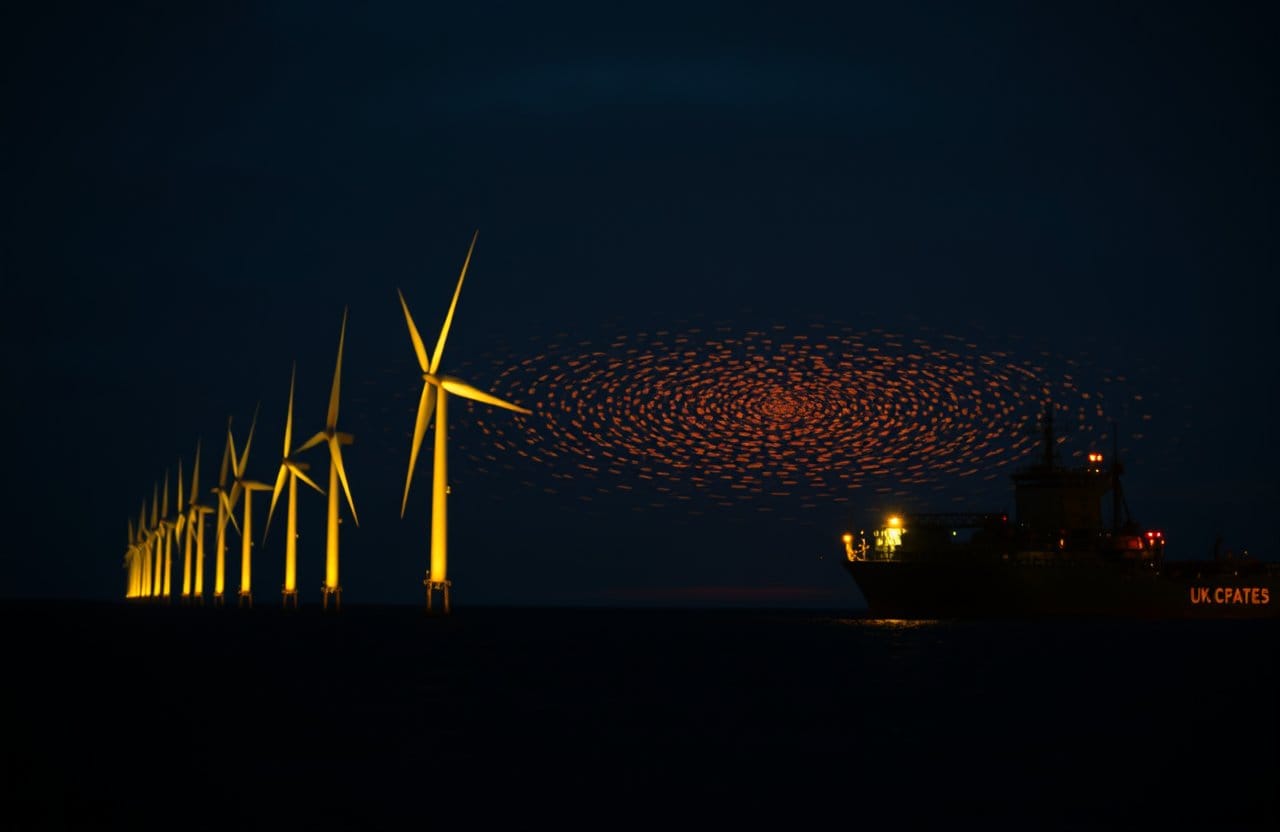
    The expansion of offshore wind farms off Virginia’s coast introduces a significant challenge that too few acknowledge: radar interference. These massive turbines create what experts call “radar clutter,” essentially noise that disrupts the clear signals our military relies on to monitor maritime activity.
    Norfolk, home to the largest naval base in the world, depends heavily on radar precision. Without it, tracking potential threats becomes a game of guesswork, not strategy.

    This is not a minor technical hiccup but a strategic vulnerability. Our military’s ability to secure the eastern seaboard hinges on uninterrupted radar operation.
    The turbines’ rotating blades reflect radar waves unpredictably, creating false targets and masking real ones. Consequently, this interference creates gaps in radar coverage, which adversaries could exploit with ease.

    Balancing Renewable Energy with National Defense

    Renewable energy investments often come with valid environmental and economic incentives. We get that.
    However, the American Democracy Project insists that green ambitions must not blind policymakers to security realities. The push for offshore wind power lacks a coherent strategy to mitigate radar disruptions, exposing a dangerous disconnect between energy goals and defense needs.
    Moreover, decision-makers appear to underestimate how these turbines intersect with military operations. There is scant evidence of robust collaboration between energy developers and the Department of Defense.
    This gap risks turning a well-intended climate initiative into a national security liability.

    Political Myopia and Policy Failures

    This situation exposes a broader failure in governance. Our leaders, especially Democrats who champion green energy, seem dazzled by the promise of clean power without grappling with complex trade-offs.
    They ignore the inconvenient truth that smart governance requires tough compromises and integrated planning — qualities sorely missing here.

    The American Democracy Project has long warned that the left’s rush toward renewable energy often resembles ideological zeal rather than pragmatic policy.
    Here, it results in a glaring blind spot where enthusiasm for offshore wind collides with the harsh realities of military defense.
    The lack of foresight not only undermines national security but also risks public trust in energy policies.

    Conclusion

    Virginia’s offshore wind expansion plan, while well-meaning, illustrates how good intentions can falter without practical governance.
    National security must remain paramount, especially when it comes to protecting our naval assets and strategic radar systems.
    The American Democracy Project calls for an immediate reassessment and smarter coordination to prevent turning a green energy initiative into a security risk.

    Demand smarter energy policies that protect our national security—stay informed and hold leaders accountable.

    Virginia Offshore Wind Expansion Poses National Security Risks