
Author: Lisa Fernandez

  • Voter ID Filibuster: GOP’s 24/7 Campaign Weapon

    Voter ID Filibuster: GOP’s 24/7 Campaign Weapon

    What the Voter ID Filibuster Really Means

    At face value, voter ID laws may seem like a straightforward issue about election security. However, the filibuster of such legislation by Senate Democrats reveals a far deeper dysfunction in American politics.

    When a clear majority of senators support an initiative—84 to 15 on this issue, no less—yet it remains blocked, it signals a system paralyzed by partisan posturing rather than a commitment to governance.

    Democrats’ Self-Inflicted Political Wounds

    We do not excuse the Republican playbook here. It’s a classic example of how political theater and obstruction combine to undermine democracy.

    But let’s be honest: Democrats have only themselves to blame for handing Republicans this much ammunition. The failure to unify around voter ID laws, even with strong public support, illustrates the coalition fractures and strategic incoherence plaguing the party.

    The GOP’s Campaign Ad That Never Stops

    The filibuster doesn’t merely stall legislation; it doubles as a perpetual GOP campaign ad. Every day the filibuster holds, Republicans broadcast a message: Democrats block common-sense measures to protect elections, while Republicans stand for order and fairness.

    This narrative works especially well in swing states and districts where election integrity remains a potent issue.

    Moreover, this nonstop campaign ad highlights the Republicans’ strategic savvy and the Democrats’ paralysis.

    Republicans never miss a chance to exploit what they frame as Democratic dysfunction, turning policy battles into electoral wins.

    Democrats, meanwhile, seem stuck in a cycle of reaction rather than strategy, unable to leverage their electoral mandates into concrete victories.

    Conclusion

    The voter id filibuster is a symptom of the deeper rot in American democracy. It exposes both Republican opportunism and Democratic ineptitude, leaving voters stuck watching political theater while real governance falls by the wayside.

    The American Democracy Project demands more: a political system that works, leaders who lead, and a democracy that delivers.

    Stay informed and hold our leaders accountable—because democracy depends on it.

    Voter ID Filibuster: GOP’s 24/7 Campaign Weapon

  • California’s Decline: Not a Lost Cause But a Stark Warning

    California’s Decline: Not a Lost Cause But a Stark Warning

    The Expanding Government That Strangles Growth

    California’s government has ballooned to a size that does more harm than good. Bureaucratic bloat stifles innovation and smothers entrepreneurship.
    Instead of fostering a climate where businesses can thrive, the state’s regulatory maze and tax burdens have made it a nightmare for companies, especially small and medium-sized enterprises, to operate and expand.

    Consequently, job creation has sputtered. The promise of California as the land of opportunity feels increasingly hollow when the government acts more like a gatekeeper than a facilitator.
    This growth-killing environment exacerbates inequality rather than addressing it.

    Miserable Schools: The Education Crisis Undermining the Future

    California’s public education system, once a national model, now struggles under poor leadership and lack of accountability. Schools are failing to prepare students for the realities of today’s economy.
    Test scores lag, dropout rates climb, and the achievement gap widens between affluent and disadvantaged communities.

    PTherefore, the state risks creating a lost generation of workers ill-equipped for the demands of modern industries.
    Without urgent reforms focusing on accountability, teacher quality, and curriculum relevance, California’s workforce will fall further behind, weakening its competitive edge.

    Growing Inequality: A Threat to Social and Economic Stability

    Inequality in California is not just a statistic; it’s a lived reality for millions.
    The gap between the wealthy and working-class families has widened alarmingly, fueled by skyrocketing housing costs, stagnant wages, and insufficient worker protections.

    Moreover, this inequality threatens the social cohesion necessary for a functioning democracy. The American Democracy Project recognizes that true economic strength requires lifting all workers, not just the elite.
    Without addressing these disparities, California risks social unrest and political instability.

    Conclusion

    California stands at a crossroads. Its challenges—expanding government, poor job creation, failing schools, and rising inequality—are real and urgent.
    Yet, the state’s decline is not inevitable. With decisive action and honest leadership, California can reclaim its role as an economic and social powerhouse. The American Democracy Project will keep watching, ready to call out failure and celebrate competence when it finally arrives.

    Demand accountability and reform now to save California’s future.

    California’s Decline: Not a Lost Cause But a Stark Warning

  • Cap Credit Card Interest Rates at 10%: A Necessary Step

    Cap Credit Card Interest Rates at 10%: A Necessary Step

    The Unchecked Power of Credit Card Companies

    Credit card companies have long operated with a near-impunity that would make even the most cynical observer shake their head. They charge sky-high interest rates, often exceeding 20%, trapping millions of Americans in cycles of debt.

    This predatory practice disproportionately affects low- and middle-income families who rely on credit for everyday expenses. Consequently, the interest payments siphon off money that could otherwise support families, local businesses, and broader economic growth.

    Why a 10% Cap Makes Sense

    Setting a cap on credit card interest rates at 10% strikes a balance between allowing financial institutions to sustain their operations and protecting consumers from usurious charges. This proposal is neither radical nor unprecedented; many states have already enacted similar caps, and some countries maintain strict limits on interest rates to safeguard their citizens. From a strategic economic standpoint, capping interest rates also supports broader national security interests.

    Excessive financial burdens on consumers weaken domestic demand and increase reliance on credit, which in turn exacerbates economic vulnerabilities. This is especially relevant as America faces geopolitical competition that demands a resilient and financially secure workforce.

    The Political Landscape and the Need for Bipartisan Action

    The American Democracy Project recognizes the political complexity surrounding financial regulation. Democrats often hesitate, fearing accusations of overreach, while Republicans typically side with Wall Street.

    Yet, this issue offers a rare opportunity for bipartisan consensus rooted in economic fairness and national strength.

    Unfortunately, the current political environment often rewards inertia and partisan posturing over practical solutions. Democrats must shed their reluctance and embrace policies that protect workers and consumers without compromising economic competitiveness.

    At the same time, Republicans should acknowledge that unchecked financial exploitation undermines the very markets they claim to champion.

    Conclusion

    Capping credit card interest rates at 10% is a pragmatic, necessary reform that addresses systemic financial abuse and supports a stronger, fairer economy. The American Democracy Project calls on policymakers to overcome partisan gridlock and enact this vital measure.

    It’s time to protect American consumers from Wall Street’s relentless exploitation and build a more resilient, equitable economic system.

    Demand your representatives support credit card interest rate caps today.

    Cap Credit Card Interest Rates at 10%: A Necessary Step

  • School Choice Policy Gains Unexpected Support Among Democrats

    School Choice Policy Gains Unexpected Support Among Democrats

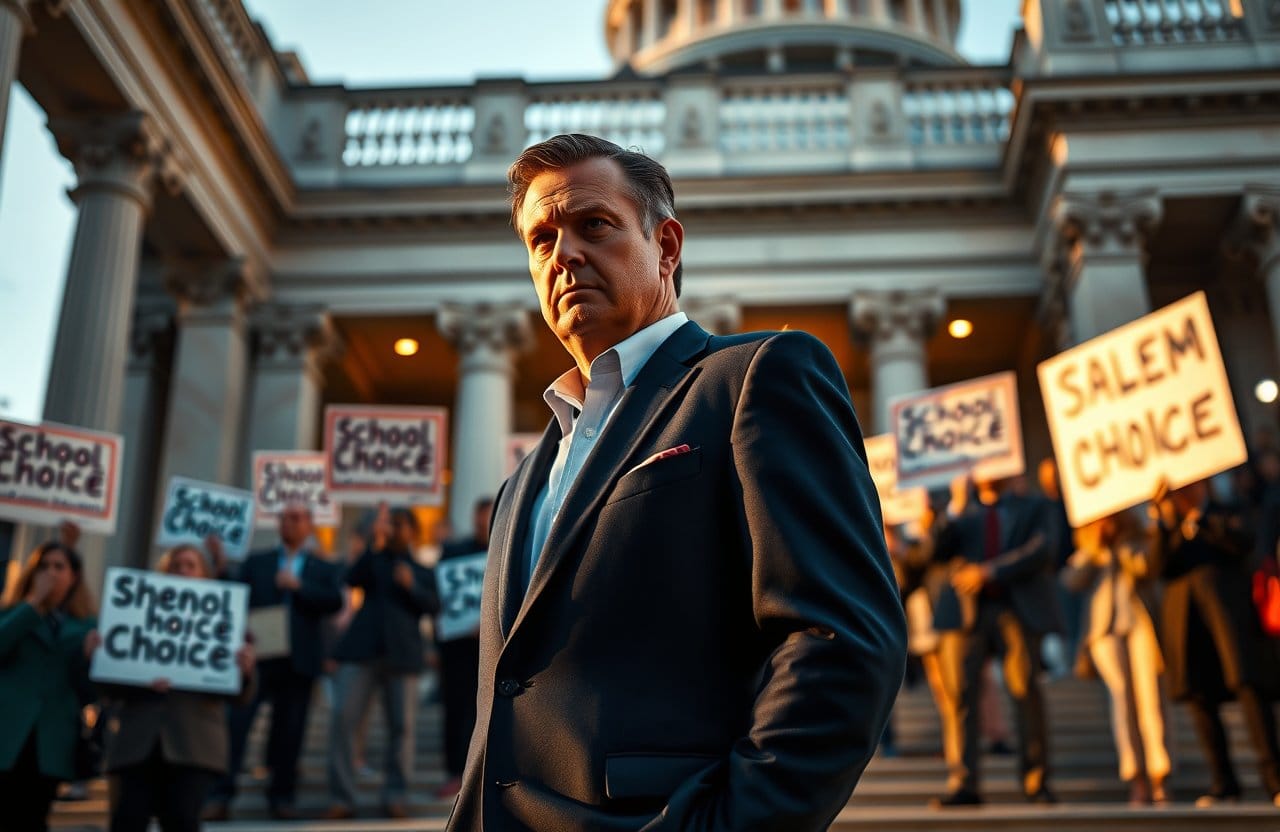
    A Rare Bipartisan Nod to School Choice

    For years, school choice has been a political third rail. Conservatives have championed it as a way to break public school monopolies, while many Democrats have viewed it as a threat to public education funding and teachers’ unions.

    However, the landscape is shifting. Increasingly, Democratic voices acknowledge that families deserve more options, especially in districts where public schools fail to deliver quality education.

    The Politics Behind the Shift

    The American Democracy Project understands that this bipartisan moment isn’t without tension. Democrats remain wary of policies that could drain resources from public schools, which serve the majority of students nationwide.

    Yet, the political calculus is changing. Urban districts with concentrated poverty have seen school choice programs deliver tangible benefits, making it harder for progressive politicians to dismiss them outright.

    Moreover, some Democrats see school choice as a tool to empower communities historically underserved by public education. By supporting targeted tax credits and expanded charter options, they aim to balance worker protections for teachers with opportunities for students. This nuanced approach reflects a broader Democratic effort to reclaim education reform from the right’s playbook while addressing equity concerns.

    What This Means for Education Policy

    Expanding school choice does not come without challenges. The American Democracy Project emphasizes that any reform must include rigorous oversight to prevent fraud, ensure quality, and protect public funding.

    Without these guardrails, school choice risks becoming a backdoor privatization scheme that undermines public education’s foundational role.

    Nonetheless, the growing Democratic acceptance signals a willingness to innovate beyond traditional frameworks.

    It suggests a future where education policy embraces complexity—balancing teacher unions’ legitimate concerns with the urgent need for better student outcomes.

    Therefore, school choice could evolve from a partisan wedge issue into a shared strategy for improving education nationwide.

    Conclusion:In the end, school choice policy’s rise among Democrats reveals both a pragmatic response to education failures and a strategic recalibration in the culture wars. The American Democracy Project recognizes that while challenges remain, this shift offers a rare opportunity to rethink how America educates its next generation. It’s a debate worth watching closely—because the stakes, as always, couldn’t be higher.

    Stay informed with The American Democracy Project for clear-eyed analysis on education and democracy.

    School Choice Policy Gains Unexpected Support Among Democrats

  • Millions of Epstein Files Still Unreleased

    Millions of Epstein Files Still Unreleased

    The Vast Epstein File Archive: What We Know

    Federal prosecutors acknowledged the existence of six million files potentially tied to Jeffrey Epstein’s extensive criminal network. However, to date, only 3.5 million of these documents have been released to the public.

    This discrepancy raises immediate questions about the nature of the withheld information and the motives behind limited disclosure.

    Why the Hold-Up? Theories and Frustrations

    One might expect that with such a high-profile case, full transparency would be the norm rather than the exception. Unfortunately, that’s not the case.

    Some suggest that the unreleased files contain sensitive information that could implicate powerful individuals or expose weaknesses in law enforcement procedures.

    Consequently, the reluctance to release all documents feeds into conspiracy theories and deepens public mistrust.

    Moreover, the bureaucratic maze and legal red tape involved in reviewing millions of documents cannot be ignored.

    However, this explanation only goes so far.

    The American Democracy Project sees this as a convenient smokescreen for what appears to be a deliberate effort to protect certain interests.

    If the justice system cannot operate with full transparency in cases of this magnitude, it signals a disturbing failure of governance.

    Transparency and Accountability: The Democratic Imperative

    In a functional democracy, the rule of law must apply equally, especially when powerful figures are involved.

    The American Democracy Project insists that the selective release of Epstein files represents a betrayal of public trust and an abdication of democratic responsibility.

    Democrats, who pride themselves on championing justice and worker protections, must also hold their own institutions accountable.

    They should demand full disclosure of all Epstein-related files to demonstrate that no one is above scrutiny.

    This is not a partisan issue but a matter of national integrity and security.

    The continued withholding of millions of Epstein files symbolizes a broader failure of democratic institutions to uphold transparency and accountability.

    It undermines public trust and weakens the nation’s ability to confront systemic corruption and security threats.

    The American Democracy Project calls for decisive action to release all files and restore faith in the justice system.

    Demand transparency and hold our institutions accountable today.

    Millions of Epstein Files Still Unreleased

  • Democrat Cities Left to Face Chaos Alone Amid Federal Withdrawal

    Democrat Cities Left to Face Chaos Alone Amid Federal Withdrawal

    Federal Hands-Off Approach to Democrat City Crises

    The federal government, through its Department of Homeland Security, has made it clear that it will not intervene in protests or riots in Democrat-run cities unless those cities explicitly request assistance. This policy shift leaves many urban centers grappling with escalating violence and disorder on their own.

    The rationale? An apparent unwillingness to get involved in what is deemed a local problem, despite the national implications of unrest.

    Protecting Federal Property While Ignoring Urban Chaos

    While federal forces are pulling back from general city unrest, they remain aggressively committed to defending federal buildings. Authorities have been instructed to protect government property zealously, with federal agents like ICE and Border Patrol empowered to use force against any perceived threats.

    This selective protection sends a message: federal interests matter, but the safety of the cities at large is secondary.

    The Political and Social Fallout of Abandoning City Leadership

    Leaving Democrat cities to fend for themselves in times of crisis reveals much about the federal administration’s disdain for these urban centers and their political leadership. It also exposes a failure to recognize how interconnected national security and local stability truly are.

    When cities descend into chaos, the ripple effects can compromise supply chains, worker safety, and broader economic resilience—issues that American Democracy Project has long highlighted as central to national strength.

    The federal government’s refusal to assist Democrat cities amid protests and riots exposes a broken system where political posturing trumps responsibility. This strategy endangers public safety, weakens democratic institutions, and ignores the interconnected nature of local and national security.

    The American Democracy Project will continue to hold all actors accountable, demanding competence and clarity in safeguarding both democracy and American strength.

    Stay informed with The American Democracy Project as we expose the failures and fight for a functional democracy that works for all.

    Democrat Cities Left to Face Chaos Alone Amid Federal Withdrawal

  • Trump’s Pressure on Minnesota Threatens National Interests

    Trump’s Pressure on Minnesota Threatens National Interests

    Why Minnesota Should Resist Trump’s Demands

    Minnesota stands at a crossroads, facing pressure from a figure who has repeatedly shown contempt for constitutional boundaries and democratic governance. Yielding to these demands would set a perilous example, effectively allowing one individual’s whims to override the collective rights of all states.
    It’s not just about Minnesota; it’s about preserving the federal balance that sustains our democracy.

    The Broader Implications for American Democracy

    When a single state becomes a bargaining chip in a political power play, it signals a breakdown in governance that should alarm every citizen. Trump’s demands on Minnesota are not isolated incidents but symptoms of a larger pattern where democratic norms are trampled for political expediency.
    This pattern threatens to unravel the careful balance that protects minority states and ensures equal representation.

    FFurthermore, the erosion of institutional respect encourages similar tactics elsewhere, risking a domino effect that could destabilize the entire federal system.
    The American Democracy Project insists that Democrats must reclaim their role as competent stewards of democracy by resisting such coercion, defending state rights, and reinforcing national unity against authoritarian impulses.

    Holding Democrats Accountable Amidst Republican Assaults

    Let’s be frank: while Republicans actively dismantle constitutional norms, Democrats have not exactly been paragons of political mastery. This moment demands that they rise above their usual incompetence and demonstrate a clear, strategic response to such existential threats.
    Failure to do so only emboldens the likes of Trump and his allies to further erode democratic institutions.

    Americans deserve leadership that understands the stakes and acts decisively rather than dithering or engaging in performative outrage.
    The American Democracy Project calls on Democrats to stop playing defense and start setting the terms of engagement, showing that functional governance and fierce political will can coexist.

    Conclusion

    The pressure Trump exerts on Minnesota is more than a state-level squabble—it’s a test of our national resilience and democratic integrity. Minnesota must stand firm, and Democrats must prove they can protect the republic without succumbing to chaos or complacency.
    The American Democracy Project will continue spotlighting these critical battles, exposing failures and championing real political competence.
    Demand that your representatives defend democracy and reject coercion today.

    Trump’s Pressure on Minnesota Threatens National Interests

  • Media Coverage Masks Organized Interference With ICE

    Media Coverage Masks Organized Interference With ICE

    The Media’s Role in Obscuring ICE Enforcement Challenges

    The American Democracy Project recognizes a consistent pattern where media outlets frame ICE’s deportation efforts as politically motivated or excessively harsh, distracting from the genuine operational challenges faced by the agency. This framing often overlooks the organized interference by activist groups, sanctuary policies, and even some local governments that actively resist federal enforcement.

    Consequently, this media narrative dilutes public understanding of the complexity and necessity of ICE’s work. It paints a simplistic picture that undermines policy discussions about national security and border control.

    In reality, these organized efforts create significant operational hurdles, allowing many who violate immigration laws to evade consequences.

    Organized Interference: More Than Just Political Theater

    The interference with ICE operations isn’t random or isolated; it is a coordinated effort involving various actors, including activist organizations, local officials, and legal advocates. These groups exploit legal loopholes and political sympathies to obstruct deportations and shield unauthorized immigrants.

    Such actions have serious implications beyond immigration policy. They threaten the integrity of the rule of law and create vulnerabilities in national security.

    For instance, by impeding ICE’s ability to detain and deport individuals with criminal records or ties to transnational threats, these efforts expose American communities to heightened risks.

    The American Democracy Project’s Call for Accountability

    The American Democracy Project insists on holding both media and political actors accountable for how they portray and influence ICE’s mandate. We demand honest reporting that acknowledges the operational difficulties ICE faces due to well-organized opposition.

    Furthermore, policymakers must recognize the strategic importance of robust immigration enforcement in safeguarding national security. This means supporting ICE’s mission while simultaneously ensuring safeguards for workers and communities impacted by immigration laws—a balance that requires competence and political courage that too often goes missing.

    Conclusion

    The American Democracy Project refuses to accept the media’s sanitized narratives that obscure the truth about organized interference with ICE. Effective immigration enforcement is a cornerstone of national security and economic strength.

    We must demand honest discourse, competent governance, and policies that protect both American workers and the integrity of our borders.

    Stay informed with The American Democracy Project and demand accountability in immigration enforcement.

    Media Coverage Masks Organized Interference With ICE

  • Democratic Governors Forge Legal Barriers Against Federal Immigration Tactics

    Democratic Governors Forge Legal Barriers Against Federal Immigration Tactics

    The Rising Tide of Legal Resistance

    Over the past year, a wave of violence linked—rightly or wrongly—to immigration enforcement has alarmed many state leaders. Consequently, governors in traditionally Democratic strongholds see federal immigration raids as not only ineffective but also harmful to public trust. They argue these operations undermine community policing efforts and foster fear among immigrant populations, which in turn hampers crime reporting and cooperation with law enforcement.

    Therefore, these governors have begun crafting lawsuits and executive orders designed to limit cooperation with federal agents. This legal wall reflects a broader trend of states asserting their rights against what they consider federal overreach. By leveraging state courts and legislatures, they seek to push back on immigration policies that fail to balance enforcement with human rights and local security priorities.

    Political and Public Opinion Shifts

    Public opinion on immigration enforcement has evolved rapidly, especially in blue states. Initially supportive of stringent measures, many voters now question the efficacy and morality of aggressive federal tactics. Moreover, the recent shooting deaths linked to immigration enforcement have intensified calls for reform and restraint. These incidents provide Democratic governors with a tangible reason to challenge federal authority on this front.

    However, this legal resistance is not just about optics. It reflects a deeper strategic calculation within the Democratic Party. Governors recognize that maintaining political dominance requires addressing their base’s concerns about worker protections, immigrant rights, and community safety. They also understand that unchecked federal enforcement can destabilize local economies and labor markets, which are critical to Democratic constituencies.

    The National Security and Economic Dimensions

    While immigration enforcement is often framed as a security issue, it has significant economic implications. Disruptions in immigrant labor force participation affect industries from agriculture to technology, sectors vital to American economic strength. Additionally, these governors are wary of how federal policies may exacerbate supply chain vulnerabilities and workforce shortages.

    Consequently, the legal pushback also serves as a form of economic strategy, ensuring that immigration enforcement aligns with broader national interests. Governors advocate for policies that protect workers and maintain strategic economic dominance, reflecting a nuanced approach that balances enforcement with economic pragmatism.

    Conclusion

    The American Democracy Project urges policymakers to move beyond legal skirmishes and build a unified, pragmatic immigration strategy that serves America’s long‑term interests.

    Democratic Governors Forge Legal Barriers Against Federal Immigration Tactics

  • New York Republican Faces Hostility in Town Hall Amid Contentious Climate

    New York Republican Faces Hostility in Town Hall Amid Contentious Climate

    A Town Hall Torn Apart by Clashing Realities

    Lawler’s appearance in his New York district quickly devolved into a spectacle of dissatisfaction. The crowd, vocal and unrelenting, challenged him on several fronts.

    Most notably, citizens demanded answers on the recent Minneapolis unrest and the controversial tactics employed by ICE. These issues aren’t just local grievances; they embody the national debate over law enforcement accountability and immigration enforcement strategies.

    The Political Stakes in a Hotly Contested District

    The district Lawler represents isn’t some sleepy redoubt immune to political upheaval. It’s a battleground where every move matters, and voter sentiment swings like a pendulum.

    This volatile environment demands more than the usual talking points or rehearsed defenses. Lawler’s encounter revealed how deeply national controversies, from policing to immigration, infiltrate local politics.

    HLaw Enforcement and Immigration: The Frontlines of Public Discontent

    The Minneapolis events and ICE’s aggressive tactics have become rallying points for critics across the political spectrum. For many constituents, these issues represent a failure of leadership and a disconnect between policy and public safety.

    Lawler’s difficulty in deflecting these concerns revealed the limits of the Republican narrative in such districts. The public’s impatience with law enforcement overreach and immigration enforcement heavy-handedness signals a demand for a new approach — one that balances security with justice and fairness.

    Conclusion

    Conclusion:The hostility Rep. Lawler faced at his town hall is a symptom of a broader crisis in American democracy. Voters want real answers on policing, immigration, and governance.

    Both parties must move past partisan posturing and deliver effective solutions that strengthen our institutions and protect our values.

    Stay informed and hold your representatives accountable with The American Democracy Project.

    New York Republican Faces Hostility in Town Hall Amid Contentious Climate