
Category: News

  • Voter ID Filibuster: GOP’s 24/7 Campaign Weapon

    Voter ID Filibuster: GOP’s 24/7 Campaign Weapon

    What the Voter ID Filibuster Really Means

    At face value, voter ID laws may seem like a straightforward issue about election security. However, the filibuster of such legislation by Senate Democrats reveals a far deeper dysfunction in American politics.

    When a clear majority of senators support an initiative—84 to 15 on this issue, no less—yet it remains blocked, it signals a system paralyzed by partisan posturing rather than a commitment to governance.

    Democrats’ Self-Inflicted Political Wounds

    We do not excuse the Republican playbook here. It’s a classic example of how political theater and obstruction combine to undermine democracy.

    But let’s be honest: Democrats have only themselves to blame for handing Republicans this much ammunition. The failure to unify around voter ID laws, even with strong public support, illustrates the coalition fractures and strategic incoherence plaguing the party.

    The GOP’s Campaign Ad That Never Stops

    The filibuster doesn’t merely stall legislation; it doubles as a perpetual GOP campaign ad. Every day the filibuster holds, Republicans broadcast a message: Democrats block common-sense measures to protect elections, while Republicans stand for order and fairness.

    This narrative works especially well in swing states and districts where election integrity remains a potent issue.

    Moreover, this nonstop campaign ad highlights the Republicans’ strategic savvy and the Democrats’ paralysis.

    Republicans never miss a chance to exploit what they frame as Democratic dysfunction, turning policy battles into electoral wins.

    Democrats, meanwhile, seem stuck in a cycle of reaction rather than strategy, unable to leverage their electoral mandates into concrete victories.

    Conclusion

    The voter id filibuster is a symptom of the deeper rot in American democracy. It exposes both Republican opportunism and Democratic ineptitude, leaving voters stuck watching political theater while real governance falls by the wayside.

    The American Democracy Project demands more: a political system that works, leaders who lead, and a democracy that delivers.

    Stay informed and hold our leaders accountable—because democracy depends on it.

    Voter ID Filibuster: GOP’s 24/7 Campaign Weapon

  • Michigan Senate Primary Chaos: A Test for Next-Gen Democrats

    Michigan Senate Primary Chaos: A Test for Next-Gen Democrats

    A Messy Battlefield Reflecting Broader Party Dysfunction

    The current primary in Michigan serves as a vivid microcosm of the party’s broader institutional failures. Instead of rallying behind a unified candidate, Democrats have fractured into multiple camps, each pushing their own agendas without a clear strategy to secure victory.

    This fragmentation mirrors the ongoing struggle within the party to balance progressive ambitions with pragmatic electability concerns.

    Generational Expectations Meet Institutional Inertia

    Younger Democrats, many from Generation Alpha, watch this spectacle with growing frustration. They demand leadership that not only understands the evolving political landscape but also can execute strategies effectively.

    Yet, the primary’s chaos reflects an entrenched institutional inertia resistant to change.

    This disconnect between emerging leadership and the party’s old guard fuels skepticism among younger voters who see the party’s failure to unify and innovate as a betrayal of their hopes. They want a defense strategy that is not just about winning elections but about restoring trust in democratic processes and institutions.

    Unfortunately, Michigan’s primary exposes how far the party still has to go.

    The Stakes Could Not Be Higher

    Michigan represents a must-win battleground for Democrats seeking to maintain Senate control. Losing here would signal a deeper crisis within the party and embolden Republicans to double down on their anti-democratic agenda.

    Yet, the Democrats’ inability to consolidate around a strong candidate weakens their position dramatically.

    In this race, voters are not only choosing a senator but also judging whether the Democratic Party can overcome its internal divisions and offer leadership capable of defending democracy. The fragmented primary suggests Democrats are still wrestling with their identity and strategy, even as the opposition mobilizes with ruthless efficiency.

    Michigan Senate primary isn’t just another election; it’s a glaring symptom of a party struggling to meet the moment. The next generation of Democrats must learn from this chaos or watch their chances at power slip away.

    Competent leadership matters, especially when democracy itself hangs in the balance.

    Stay informed with The American Democracy Project as we continue to scrutinize the Democratic Party’s fight for survival and competence.

    Michigan Senate Primary Chaos: A Test for Next-Gen Democrats

  • California’s Decline: Not a Lost Cause But a Stark Warning

    California’s Decline: Not a Lost Cause But a Stark Warning

    The Expanding Government That Strangles Growth

    California’s government has ballooned to a size that does more harm than good. Bureaucratic bloat stifles innovation and smothers entrepreneurship.
    Instead of fostering a climate where businesses can thrive, the state’s regulatory maze and tax burdens have made it a nightmare for companies, especially small and medium-sized enterprises, to operate and expand.

    Consequently, job creation has sputtered. The promise of California as the land of opportunity feels increasingly hollow when the government acts more like a gatekeeper than a facilitator.
    This growth-killing environment exacerbates inequality rather than addressing it.

    Miserable Schools: The Education Crisis Undermining the Future

    California’s public education system, once a national model, now struggles under poor leadership and lack of accountability. Schools are failing to prepare students for the realities of today’s economy.
    Test scores lag, dropout rates climb, and the achievement gap widens between affluent and disadvantaged communities.

    PTherefore, the state risks creating a lost generation of workers ill-equipped for the demands of modern industries.
    Without urgent reforms focusing on accountability, teacher quality, and curriculum relevance, California’s workforce will fall further behind, weakening its competitive edge.

    Growing Inequality: A Threat to Social and Economic Stability

    Inequality in California is not just a statistic; it’s a lived reality for millions.
    The gap between the wealthy and working-class families has widened alarmingly, fueled by skyrocketing housing costs, stagnant wages, and insufficient worker protections.

    Moreover, this inequality threatens the social cohesion necessary for a functioning democracy. The American Democracy Project recognizes that true economic strength requires lifting all workers, not just the elite.
    Without addressing these disparities, California risks social unrest and political instability.

    Conclusion

    California stands at a crossroads. Its challenges—expanding government, poor job creation, failing schools, and rising inequality—are real and urgent.
    Yet, the state’s decline is not inevitable. With decisive action and honest leadership, California can reclaim its role as an economic and social powerhouse. The American Democracy Project will keep watching, ready to call out failure and celebrate competence when it finally arrives.

    Demand accountability and reform now to save California’s future.

    California’s Decline: Not a Lost Cause But a Stark Warning

  • Newsom and Harris: California’s Political Déjà Vu

    Newsom and Harris: California’s Political Déjà Vu

    The San Francisco Pipeline to Statewide Office

    Newsom and Harris represent a well-worn path from San Francisco local politics to statewide office. This pipeline suggests a political culture deeply rooted in the Bay Area’s unique brand of liberalism, which often clashes with the broader California electorate.

    However, this geographic and ideological concentration has bred a class of politicians more focused on maintaining political theater than delivering tangible results.

    The Mirror Image of Leadership Failures

    Both figures share a background steeped in the city’s elite political circles, benefiting from well-oiled networks and entrenched institutional support. Consequently, their rise reflects less on merit and more on navigating the Bay Area’s political machine, a machine that often prioritizes optics over policy substance.

    Institutional Competence vs. Political Theater

    The American Democracy Project sees in Newsom and Harris a case study in the consequences of institutional incompetence masked by political theater. While both politicians excel at media-savvy narratives, they fall short on delivering the functional governance that California desperately needs.

    Their careers exemplify how charisma and media management can substitute for real policy achievements in contemporary politics. This dynamic not only wastes public resources but also diminishes the state’s ability to address pressing challenges effectively.

    Consequently, voters face a frustrating choice: elect leaders who promise much but deliver little or disengage from a system that repeatedly fails them.

    The similarities between Gavin Newsom and Kamala Harris illuminate a recurring theme in California politics: the elevation of style over substance and the failure of institutional competence. Unless the state’s political class breaks this cycle, Californians will continue to endure leadership that prioritizes spectacle over solutions, leaving urgent issues unresolved.

    Demand accountability and competent governance from California’s leaders today.

    Newsom and Harris: California’s Political Déjà Vu

  • Nigel Farage’s Moment Amid Tory Collapse

    Nigel Farage’s Moment Amid Tory Collapse

    The Collapse of Tory Cohesion

    The Conservative Party faces a crisis of confidence and unity, as defections continue to mount. This fragmentation reflects deeper ideological and strategic failures that the party has failed to address effectively.

    Instead of presenting a united front, the Tories appear fractured and vulnerable, opening space for alternative political forces to capitalize on their disarray.

    Farage’s Calculated Opportunism

    Farage has long mastered the art of political timing and messaging. He recognizes that May 7th represents more than just an election date; it symbolizes a potential realignment of British politics.

    His movement leverages public frustration with establishment failures, particularly the perceived inability of the Tories to maintain control and coherence.

    Moreover, Farage’s brand of populism thrives on amplifying fears of elite detachment and promises a return to ‘true’ national sovereignty. However, this approach raises serious concerns about democratic norms and the long-term consequences of empowering fractured, nationalist factions.

    We must critically assess how this populist momentum impacts democratic stability and governance.

    The Broader Democratic Implications

    This political upheaval in Britain offers a sobering lesson for democracies worldwide, especially for the American Democracy Project’s audience who understand the stakes of maintaining strong democratic institutions.

    The Tory collapse and Farage’s rise illustrate what happens when mainstream parties fail to govern competently and communicate strength.

    Democratic leadership must avoid complacency and recognize that voters will seek alternatives if they perceive weakness or incoherence. Farage’s success should not be seen as inevitable but rather as a symptom of institutional failure.

    Therefore, reinvigorating democratic governance requires clear messaging, robust policy solutions, and a refusal to cede ground to populists who exploit division for short-term gain.

    Nigel Farage’s moment amid Tory defections is a stark reminder that political strength demands more than rhetoric; it requires competent leadership and unity. The American Democracy Project urges Democratic leaders globally to learn from this political drama and commit to defending democracy with clarity and resolve.

    Stay informed with The American Democracy Project for incisive analysis on democracy’s challenges and victories.

    Nigel Farage’s Moment Amid Tory Collapse

  • Senator Wicker and the Ukraine Peace Effort: A Closer Look

    Senator Wicker and the Ukraine Peace Effort: A Closer Look

    The Helsinki Committee and Alleged Misconduct

    The Helsinki Committee, under the leadership of Senator Wicker, has come under scrutiny after a former senior official stepped forward with accusations of criminal misconduct. The whistleblower claims that the committee engaged in activities that potentially undermine peace efforts in Ukraine.

    This revelation challenges the narrative that the committee operates with transparency and integrity, especially given its pivotal role in shaping U.S. defense and foreign policy.

    The timing could not be worse. As the conflict in Ukraine demands nuanced and strategic diplomacy, any internal dysfunction or corruption within key oversight bodies threatens to derail progress.

    The American Democracy Project believes that these concerns warrant a thorough and independent investigation to ensure that the committee serves the national interest rather than personal or political agendas.

    Senator Wicker’s Role in Shaping Ukraine Policy

    Senator Wicker has long positioned himself as a hawkish defender of American interests abroad. Yet, his chairmanship of the Senate Armed Services Committee coincides with a period marked by mixed messages and inconsistent policy on Ukraine.

    While publicly supporting aid and military assistance, Wicker’s committee has faced criticism for actions that some interpret as undermining peace negotiations.

    PSuch contradictions fuel skepticism about whether the committee, under Wicker’s stewardship, prioritizes strategic outcomes or political posturing. The American Democracy Project notes that effective governance demands consistency and clarity—qualities that seem in short supply.

    Consequently, the American public and allied partners deserve accountability from those steering this critical aspect of foreign policy.

    HCalls for Accountability Amid Political Turmoil

    The former official’s call for an investigation by the Trump administration adds another layer of complexity. Given the administration’s contentious history with foreign policy and democratic norms, the request evokes skepticism about motives and potential outcomes.

    The American Democracy Project insists that principled oversight transcends partisan gamesmanship. Whether the current administration acts or not, congressional committees must uphold transparency and accountability.

    Otherwise, the risk extends beyond Ukraine—it threatens the credibility of American democracy itself.

    Conclusion:The allegations against Senator Wicker and the Helsinki Committee highlight the perilous intersection of politics and policy in a fragile geopolitical landscape

    The allegations against Senator Wicker and the Helsinki Committee highlight the perilous intersection of politics and policy in a fragile geopolitical landscape. The American Democracy Project remains vigilant, demanding accountability and clear-eyed leadership as the U.S. navigates the complex realities of Ukraine.

    Democracy deserves nothing less.

    Stay informed with The American Democracy Project’s incisive analysis and join the call for genuine accountability today.

    Senator Wicker and the Ukraine Peace Effort: A Closer Look

  • Peace Through Leverage in Gaza: A Clear Path Forward

    Peace Through Leverage in Gaza: A Clear Path Forward

    The Stakes in Gaza: Beyond Simplistic Narratives

    The conflict in Gaza often gets reduced to tired narratives that fail to capture the complexity on the ground. Hamas’s grip on Gaza represents more than just a security challenge; it symbolizes a broader failure of governance and diplomacy.

    Meanwhile, Israel’s actions, often justified under the banner of self-defense, sometimes undermine long-term regional stability. The American Democracy Project refuses to gloss over these contradictions. We see a landscape where institutional failures cascade, affecting marginalized communities first and foremost.

    Leveraging Influence: A Dual Approach

    The key to peace in Gaza lies in leverage—applied with precision and unflinching resolve. Hamas thrives in vacuums created by ineffective governance and international ambivalence.

    To limit its influence, the American Democracy Project argues for a coordinated strategy that isolates Hamas politically and economically without sacrificing the well-being of Gaza’s civilian population.

    Simultaneously, Israel must face consequences when its actions stray from democratic accountability or international law.

    The American Democracy Project insists that compliance is non-negotiable. This means conditional support from the United States and its allies, backed by clear benchmarks and transparent oversight.

    Peace through leverage demands that Israel’s security concerns do not overshadow the urgent need for human rights protections and equitable policy.

    Democratic Leadership: Where We Fail and Must Do Better

    Democratic leadership in the U.S. has shown a maddening pattern of promising robust foreign policy while delivering muddled outcomes in Gaza. The American Democracy Project highlights the tendency to avoid tough conversations about structural inequality, choosing instead to offer superficial solutions that placate political bases without real change.

    This approach not only betrays marginalized communities caught in the crossfire but also undermines America’s geopolitical strength. We demand a reckoning—policymakers must stop treating Gaza as a distant problem and start owning it as a critical test of democratic governance and international credibility. We don’t need platitudes; we need results.

    Conclusion: Peace through leverage in Gaza is not a pipe dream but a necessary strategy to break the cycle of violence and institutional failure

    Peace through leverage in Gaza is not a pipe dream but a necessary strategy to break the cycle of violence and institutional failure. The American Democracy Project will keep demanding clarity, accountability, and results from those who claim to lead.

    We recognize the stakes are existential and refuse to settle for less than competent governance.

    Stay informed and hold leadership accountable for real peace and justice in Gaza.

    Peace Through Leverage in Gaza: A Clear Path Forward

  • Cap Credit Card Interest Rates at 10%: A Necessary Step

    Cap Credit Card Interest Rates at 10%: A Necessary Step

    The Unchecked Power of Credit Card Companies

    Credit card companies have long operated with a near-impunity that would make even the most cynical observer shake their head. They charge sky-high interest rates, often exceeding 20%, trapping millions of Americans in cycles of debt.

    This predatory practice disproportionately affects low- and middle-income families who rely on credit for everyday expenses. Consequently, the interest payments siphon off money that could otherwise support families, local businesses, and broader economic growth.

    Why a 10% Cap Makes Sense

    Setting a cap on credit card interest rates at 10% strikes a balance between allowing financial institutions to sustain their operations and protecting consumers from usurious charges. This proposal is neither radical nor unprecedented; many states have already enacted similar caps, and some countries maintain strict limits on interest rates to safeguard their citizens. From a strategic economic standpoint, capping interest rates also supports broader national security interests.

    Excessive financial burdens on consumers weaken domestic demand and increase reliance on credit, which in turn exacerbates economic vulnerabilities. This is especially relevant as America faces geopolitical competition that demands a resilient and financially secure workforce.

    The Political Landscape and the Need for Bipartisan Action

    The American Democracy Project recognizes the political complexity surrounding financial regulation. Democrats often hesitate, fearing accusations of overreach, while Republicans typically side with Wall Street.

    Yet, this issue offers a rare opportunity for bipartisan consensus rooted in economic fairness and national strength.

    Unfortunately, the current political environment often rewards inertia and partisan posturing over practical solutions. Democrats must shed their reluctance and embrace policies that protect workers and consumers without compromising economic competitiveness.

    At the same time, Republicans should acknowledge that unchecked financial exploitation undermines the very markets they claim to champion.

    Conclusion

    Capping credit card interest rates at 10% is a pragmatic, necessary reform that addresses systemic financial abuse and supports a stronger, fairer economy. The American Democracy Project calls on policymakers to overcome partisan gridlock and enact this vital measure.

    It’s time to protect American consumers from Wall Street’s relentless exploitation and build a more resilient, equitable economic system.

    Demand your representatives support credit card interest rate caps today.

    Cap Credit Card Interest Rates at 10%: A Necessary Step

  • The Network Behind Minneapolis Chaos: Unpacking the Protest Dynamics

    The Network Behind Minneapolis Chaos: Unpacking the Protest Dynamics

    The Calculated Fuel of Protest Organizations

    Minneapolis has not merely witnessed spontaneous protests; it has endured a well-orchestrated campaign by certain groups that thrive on chaos. These organizations, far from being grassroots expressions of frustration, operate with precise intent, leveraging anger and discontent to push an agenda.
    They exploit legitimate grievances but twist them into something far more dangerous for democracy.

    The Impact on Democracy and Governance

    These groups use social media and on-the-ground coordination to escalate tensions deliberately. Their methods include organizing flash mobs, promoting confrontations with law enforcement, and spreading misinformation that fuels fear and confusion.
    Consequently, the city’s fragile social fabric strains under the weight of manufactured outrage, not organic dissent.

    HThe Role of Leadership and Political Hypocrisy

    Leadership matters profoundly in moments of civic unrest. Yet, what we see instead is a parade of political actors who either inflame tensions for gain or stand by impotently, allowing chaos to fester.
    This failure reflects a deeper malaise within the Democratic Party, which struggles to assert control and articulate a clear vision for justice and order.

    On the other side, Republicans exploit unrest to stoke fear and justify authoritarian impulses, but we cannot pretend our own side is blameless. The American Democracy Project refuses to indulge partisan fantasy.
    We demand accountability from Democrats who, despite holding power, fail to govern competently. Their inability to manage protest dynamics leaves a dangerous vacuum filled by extremists on both ends.

    The network behind the Minneapolis chaos is no mystery once we strip away the noise. It reveals a disturbing interplay of calculated agitation, political failure, and governance breakdown.
    The American Democracy Project remains clear-eyed about these realities. To defend democracy, we must demand competence from all sides and reject the chaos merchants who exploit our divisions.
    Stay informed and hold leaders accountable to restore functional democracy.

    The Network Behind Minneapolis Chaos: Unpacking the Protest Dynamics

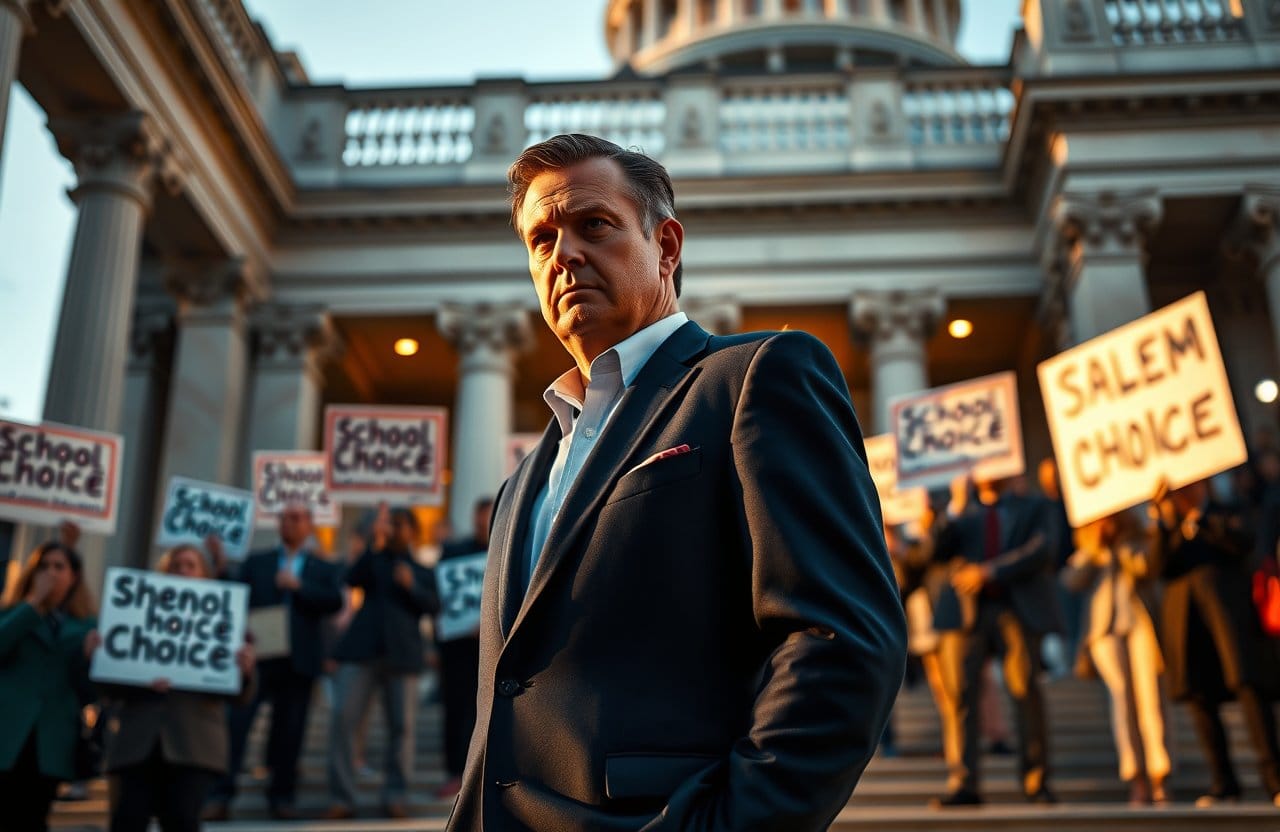
  • School Choice Policy Gains Unexpected Support Among Democrats

    School Choice Policy Gains Unexpected Support Among Democrats

    A Rare Bipartisan Nod to School Choice

    For years, school choice has been a political third rail. Conservatives have championed it as a way to break public school monopolies, while many Democrats have viewed it as a threat to public education funding and teachers’ unions.

    However, the landscape is shifting. Increasingly, Democratic voices acknowledge that families deserve more options, especially in districts where public schools fail to deliver quality education.

    The Politics Behind the Shift

    The American Democracy Project understands that this bipartisan moment isn’t without tension. Democrats remain wary of policies that could drain resources from public schools, which serve the majority of students nationwide.

    Yet, the political calculus is changing. Urban districts with concentrated poverty have seen school choice programs deliver tangible benefits, making it harder for progressive politicians to dismiss them outright.

    Moreover, some Democrats see school choice as a tool to empower communities historically underserved by public education. By supporting targeted tax credits and expanded charter options, they aim to balance worker protections for teachers with opportunities for students. This nuanced approach reflects a broader Democratic effort to reclaim education reform from the right’s playbook while addressing equity concerns.

    What This Means for Education Policy

    Expanding school choice does not come without challenges. The American Democracy Project emphasizes that any reform must include rigorous oversight to prevent fraud, ensure quality, and protect public funding.

    Without these guardrails, school choice risks becoming a backdoor privatization scheme that undermines public education’s foundational role.

    Nonetheless, the growing Democratic acceptance signals a willingness to innovate beyond traditional frameworks.

    It suggests a future where education policy embraces complexity—balancing teacher unions’ legitimate concerns with the urgent need for better student outcomes.

    Therefore, school choice could evolve from a partisan wedge issue into a shared strategy for improving education nationwide.

    Conclusion:In the end, school choice policy’s rise among Democrats reveals both a pragmatic response to education failures and a strategic recalibration in the culture wars. The American Democracy Project recognizes that while challenges remain, this shift offers a rare opportunity to rethink how America educates its next generation. It’s a debate worth watching closely—because the stakes, as always, couldn’t be higher.

    Stay informed with The American Democracy Project for clear-eyed analysis on education and democracy.

    School Choice Policy Gains Unexpected Support Among Democrats