Market Overview
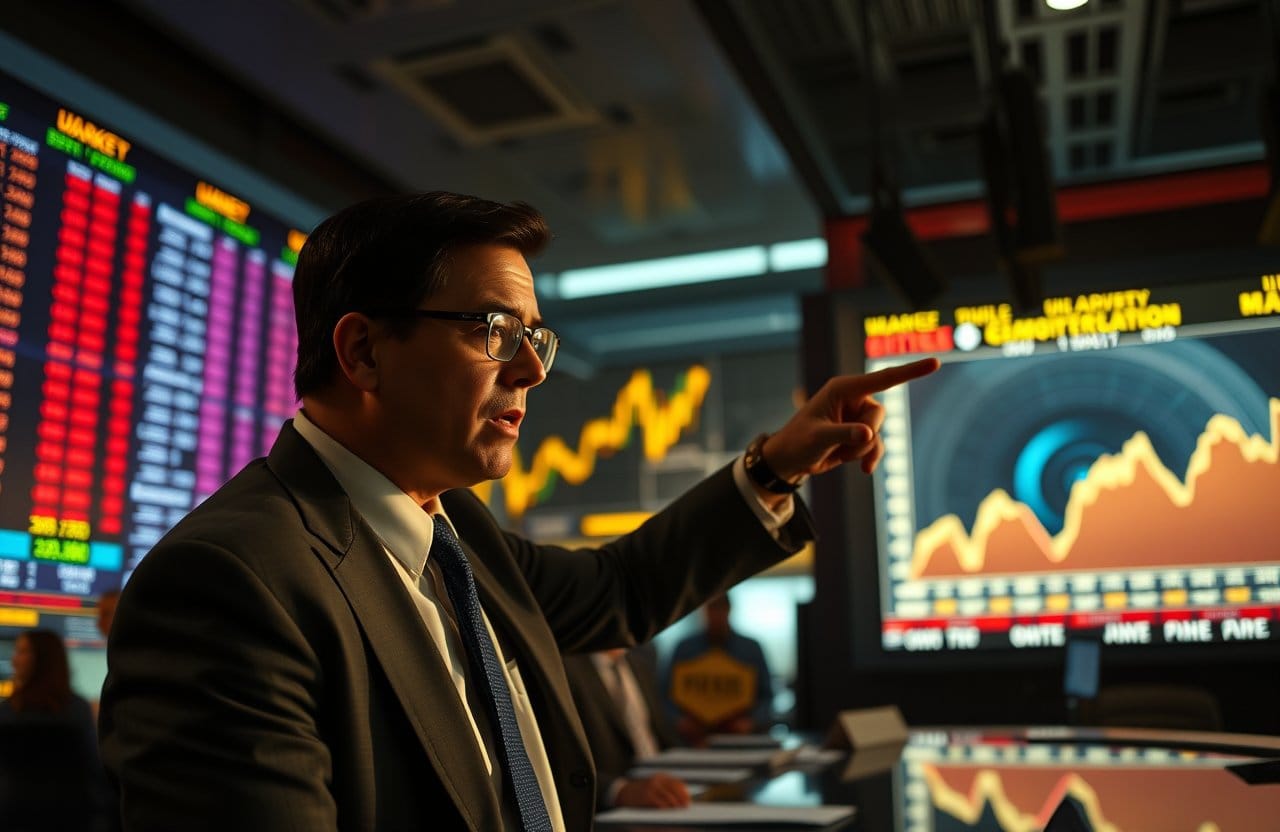
Wall Street opened Tuesday to a market that looked like a toddler’s crayon drawing — bright, chaotic, and impossible to interpret. The S&P 500 edged up 0.5% and flirted with its recent all‑time high, even though more stocks in the index fell than rose.
The Dow slipped 382 points, or 0.8%, while the Nasdaq managed a 0.9% gain. The roller‑coaster was powered by a parade of earnings that read like a mixed bag of promises and disappointment.
Earnings Highlights
UnitedHealth’s shares tumbled 19.3% after the insurer posted a quarterly profit that barely beat expectations, only to warn that its 2026 revenue forecast would be weaker than 2025’s. The health‑care sector shuddered under a tepid Medicare Advantage rate hike, and Humana, Elevance Health and CVS all slid double‑digit, a reminder that even “defensive” stocks are now on the front lines of fiscal uncertainty.
Corning surged 17.5% after announcing a up‑to‑$6 billion partnership with Meta to supply optical fiber for data‑center expansion — a rare bright spot that shows the market rewards actual delivery. General Motors and hospital operator HCA Healthcare also posted gains, each riding a profit beat and a share‑buyback program that looks suspiciously like a desperate attempt to prop up share prices while the underlying business sputters.
Fed and Inflation
The earnings season is a litmus test for a democracy that claims to reward competence. Yet the same day the Federal Reserve prepares to announce its latest interest‑rate decision, the consensus is that it will do nothing — a decision that feels less like policy and more like a political pause button.
Inflation remains stubbornly above the Fed’s 2% target, and any hint of rate cuts could fuel price spikes just as consumers are already feeling the pinch. The 10‑year Treasury yield slipped to 4.21%, a modest sigh in a room full of shouting.
International Markets
Abroad, Europe and Asia posted modest gains. India’s Sensex climbed 0.4% after Prime Minister Narendra Modi announced a free‑trade pact with the EU — a deal that touches two billion people but arrives just as Washington threatens steep tariffs on both India and the EU.
South Korea’s Kospi jumped 2.7%, and Hong Kong’s Hang Seng rallied 1.4%, underscoring that the world’s markets are still moving, even if the U.S. seems intent on turning its own engine off.
Pressure on Corporate America
The pressure on corporate America is palpable. Companies are expected to deliver ever‑larger profit growth to justify sky‑high valuations that have become the new normal.
When earnings fall short — as UnitedHealth and American Airlines both discovered — the market reacts with the kind of eye‑rolling contempt usually reserved for a bad magic trick. And while the Fed dithers, the former president’s tariff tantrums continue to echo in the corridors of power, a reminder that chaos is now a policy choice.
In the end, the market’s zigzag is less about numbers and more about a system that pretends to function while its stewards — both parties — play political chess with the nation’s future.
Conclusion
We watch, we roll our eyes, and wait for someone to fix the broken gears.